Table of Contents
ToggleNot every homeowner wants or needs a pool, and that’s perfectly fine. The good news is that a pool-free backyard opens up a world of creative possibilities that often cost less, require less maintenance, and can be customized to fit your lifestyle. Whether you’re working with a postage-stamp lot or sprawling acreage, there’s no shortage of ways to transform your outdoor space into a functional, beautiful retreat. From cozy fire pits and garden features to hardscaped lounging areas and activity zones, this guide walks you through practical, budget-friendly backyard ideas that deliver real value without the upkeep of a swimming pool.
Key Takeaways
- Backyard ideas without a pool offer creative, cost-effective alternatives that require less maintenance and can be customized to fit any lifestyle or lot size.
- Strategic outdoor seating areas with weather-resistant furniture, pergolas, and ambient lighting create welcoming gathering spaces that extend usability into evening hours.
- Fire pits and cozy seating zones serve as affordable focal points that naturally draw people outdoors and encourage relaxed gatherings at a fraction of pool costs.
- Water features like fountains and small pond systems add visual and auditory interest without the ongoing chlorine, drainage, and filtration demands of traditional pools.
- Hardscaping elements—patios, walkways, and retaining walls—define your space functionally while curved edges and varied materials create visual appeal that blends seamlessly with landscaping.
- Budget-friendly upgrades like DIY projects, solar lighting, mulch refresh, secondhand furniture, and phased planning make backyard transformations achievable without major financial investment.
Outdoor Entertaining Spaces And Seating Areas
A well-designed outdoor seating area becomes the heart of your backyard. Start by defining your gathering zone, whether that’s a covered patio, deck, or sunken lounge area. The key is choosing furniture and layout that invite people to linger.
Consider weather-resistant seating like teak, metal frames, or resin wicker that won’t rot or fade quickly. A simple dining table with four to six chairs can anchor the space, while a separate lounge zone with benches or sectionals keeps things flexible. For budget-conscious homeowners, composite outdoor furniture holds up better than cheaper plastic alternatives and looks intentional without very costly.
Lighting changes everything. String bistro lights, solar lanterns, or low-voltage LED fixtures extend usability into evening hours and add instant ambiance. A pergola overhead provides shade while creating visual structure: if a permanent structure feels like too much, a shade sail or retractable awning offers flexibility.
Fire Pits And Cozy Gathering Zones
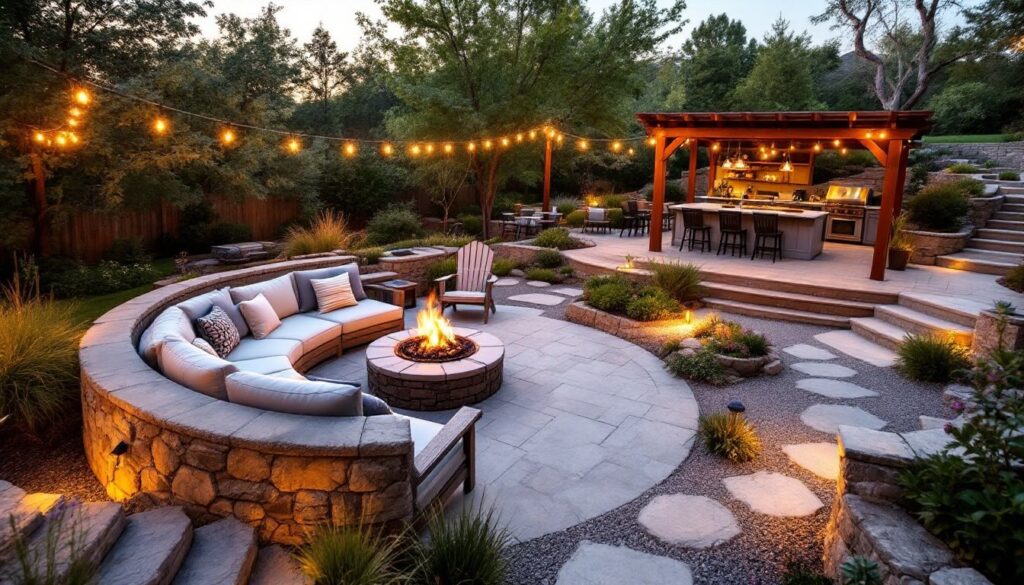
A fire pit is the easiest way to create a focal point that draws people outside. You have three main options: prefab metal bowls, stone-ring designs, or permanent built-in pits.
Prefab metal fire bowls are the most portable and budget-friendly option, starting around $150–$400. They sit on the ground, heat quickly, and are simple to move if your layout changes. For a more permanent feel, build a stone or brick ring in a circle (typically 3–4 feet in diameter) with a compacted gravel base underneath. Leave the center open for airflow and arrange seating in a semicircle around it.
Before digging, check local fire codes, many jurisdictions require fire pits to be 10 feet from structures and not directly under tree branches. Have a garden hose nearby and keep a metal spark screen on hand. Use untreated firewood only (treated lumber releases toxic fumes), and never leave a fire unattended.
Around the pit, low Adirondack chairs, log seating, or a simple bench feel authentic and encourage guests to stay. A side table for drinks or snacks makes it functional. Group multiple seating pieces at different angles rather than all facing inward, people chat naturally when they’re not staring at each other.
Landscaping And Garden Features
Thoughtful landscaping frames your backyard and makes it feel intentional. A mix of trees, shrubs, and perennials creates layers of visual interest and also provides privacy and shade.
Start with hardworking plants that earn their spot: dwarf fruit trees, ornamental grasses, and flowering shrubs that thrive in your climate zone. Group them in clusters of three or five (odd numbers feel more natural) rather than scattering singles across the lawn. Native plants are worth the investment, they’re adapted to local water and soil conditions, require less fertilizer, and support local pollinators.
Gravel-based landscape designs offer an underrated alternative to traditional turf. Replacing problem grass areas with mulch, gravel, and drought-tolerant plants cuts maintenance dramatically, especially in drier climates. A simple pathway of stepping stones or decomposed granite guides movement and creates structure.
Water Features Beyond Pools
Water adds sound, movement, and visual interest without the maintenance demands of a pool. A small fountain, birdbath, or pondless water feature brings life to a garden corner and attracts birds.
Fountains come in countless styles: stone basins, tiered designs, or modern sculptures. Most run on 120-volt electrical outlets and circulate the same water continuously, so refilling is minimal. Position one near a seating area so you catch the gentle sound.
For a more immersive option, a small koi pond or water garden (3–4 feet deep) creates a focal point. Unlike a pool, it doesn’t need draining, chlorinating, or constant filtration, a basic pump and filter keep water clear. Plant aquatic plants like water lilies and cattails around the edges: they help balance water chemistry. Stock with a few koi or goldfish and you’ve got a meditative feature that costs far less than pool upkeep.
If digging feels ambitious, a preformed pond shell (fiberglass or rubber-lined) installs in an afternoon. Make sure the ground is level and compact before laying it, and add a few inches of sand as a cushion underneath. Even a small water garden becomes a conversation starter.
Hardscaping And Patio Design
Hardscaping, patios, walkways, retaining walls, gives structure to your space and defines how people move through it. A well-placed patio becomes an extension of your home.
Material choices matter for both durability and style. Concrete pavers, natural stone, or stamped concrete are popular starting points. Pavers cost more upfront but individual pieces can be replaced if damaged: stamped concrete is cheaper but cracks can be permanent. For smaller budgets, large-format porcelain tiles mimic stone or wood at a lower cost. All should sit on a compacted gravel base (2–3 inches) with a sand layer underneath for drainage and level setting.
Size and shape influence perception. A 12×16-foot patio fits a table and chairs comfortably: go smaller and it feels cramped. Use the existing landscape as a guide, if you have large shade trees, position the patio in morning sun or dappled shade rather than full exposure. An irregular or curved edge feels softer than a straight line: curved patio edges blend into the landscape more naturally.
Retaining walls serve both function and form. If your yard slopes, a 2–3 foot wall made from stacked stone, concrete blocks, or timber retains soil and creates a level upper planting area. Check local codes, walls over 4 feet high often need a permit and possibly engineering. Use landscaping fabric behind the wall and add gravel or perforated pipe for drainage so water doesn’t pool behind it.
Walkways tie the patio to the rest of your yard. A 2–3 foot wide path feels generous without wasting space: narrower paths feel cramped. Use the same material as your patio or a complementary option. Curved paths are more forgiving than straight ones if your soil shifts slightly over time.
Recreation And Activity Areas
A backyard doesn’t have to be all relaxation. Dedicating zones for activities keeps family members and guests engaged.
Lawn games like cornhole, giant Jenga, or croquet require minimal space and setup. Mark out a small level area (20×20 feet is plenty) with string, and you’ve got a games zone. Store equipment in a weatherproof box or shed nearby.
For a more structured approach, consider a pergola-covered outdoor kitchen or dining pavilion. A simple setup with a grill, prep counter, and mini fridge lets you cook and entertain without running inside constantly. Premade modular outdoor kitchens start around $1,500: DIY versions using cinder blocks and salvaged materials cost less but require careful planning. Make sure any electrical is properly installed by a licensed electrician, outdoor circuits need GFCI protection and appropriate wire gauge for your climate.
If space allows, a herb and vegetable garden combines recreation with utility. A raised bed (roughly 4×8 feet and 2 feet deep) holds plenty of produce and keeps your back from breaking. Fill it with quality garden soil mixed with compost. Herbs like basil, rosemary, and thyme are forgiving and reward you quickly. A small trellis or arbor for climbing vegetables (peas, beans, cucumbers) adds vertical interest and shade.
Children benefit from a dedicated play area with resilient surfacing. Rubber mulch, engineered wood fiber, or poured-in-place rubber mats cushion falls better than plain dirt or grass. A simple wooden playset, sandbox, or swings can be moved as kids grow. Keep the area visible from your main seating zone so supervision is easy.
Budget-Friendly Backyard Upgrades
Transforming your backyard doesn’t require a blank check. Smart priorities and phased projects keep costs manageable.
Start with what you can do yourself. Clearing brush, removing dead trees, and edging garden beds cost only time and elbow grease. A new mulch refresh (2–3 inches deep across beds) costs $100–$300 depending on square footage and reinvigorates your landscape for minimal expense. Simple lawn aeration and overseeding improves grass health without major investment.
DIY patio and pathway projects save thousands in labor. You can lay pavers or stepping stones on a gravel base in a weekend with basic tools (rubber mallet, level, shovel). Watch YouTube tutorials first, the technique is forgiving, and mistakes are usually invisible once grass grows around the edges.
Backyard decks and patios offer another avenue for transformation. If your budget can’t stretch to a full deck rebuild, focus on refreshing stairs, replacing a few boards, or upgrading railings. A coat of deck stain or sealant ($200–$500 in materials) revives an aging surface.
For furniture, check secondhand sources, Craigslist, Facebook Marketplace, and estate sales yield solid outdoor pieces at a fraction of retail. A coat of spray paint in modern colors refreshes tired pieces. Cushions and pillows add comfort cheaply.
Lighting is one of the highest-impact, lowest-cost upgrades. Solar pathway lights ($30–$60 for a set) line walkways safely. String lights or bistro lights ($40–$100) transform a patio instantly. Rope light hidden under a pergola edge creates ambient glow for $20. These run on solar or low-voltage systems, so installation is straightforward.
Plant trees and large shrubs last, they’re the backyard’s bones. Smaller perennials and annuals are budget-friendly way to fill color into beds as you discover what works in your space. Many plants can be divided or propagated from established plantings, reducing nursery costs over time. Resources like Better Homes & Gardens and Country Living offer seasonal planting guides and design inspiration that cost nothing.