Table of Contents
ToggleA backyard pool is more than a refreshing escape on hot summer days, it’s an investment in your home’s value and your family’s outdoor lifestyle. Whether you’re planning a complete renovation or designing from scratch, the right backyard pool design ideas can transform your outdoor space into an oasis that reflects your style and fits your budget. In 2026, pool design is moving beyond simple rectangular shapes toward personalized spaces that blend aesthetics with functionality. From minimalist concrete decks to smart-connected systems and tropical retreats, today’s options give homeowners unprecedented control over their outdoor environments. This guide walks you through seven contemporary pool design styles, each with practical considerations for construction, maintenance, and integration with your existing landscape.
Key Takeaways
- Contemporary backyard pool design ideas now prioritize personalization, blending aesthetics with smart technology and sustainability rather than simple rectangular shapes.
- Minimalist pool designs offer lower maintenance and construction precision advantages, with costs ranging from $40,000–$80,000 for a 15×30-foot pool depending on materials and regional labor rates.
- Resort-style tropical and eco-friendly pools provide immersive outdoor experiences but require robust filtration systems and higher upfront investment of $50,000–$150,000+.
- Smart pool technology integration—from automated chemical dosing to smartphone controls—adds 10–15% to total pool cost and delivers reduced maintenance labor and stable water conditions.
- Multi-functional entertainment spaces combining fire features, outdoor kitchens, and layered lighting create gathering hubs that transform pools into complete outdoor lifestyle destinations.
Contemporary Minimalist Pools
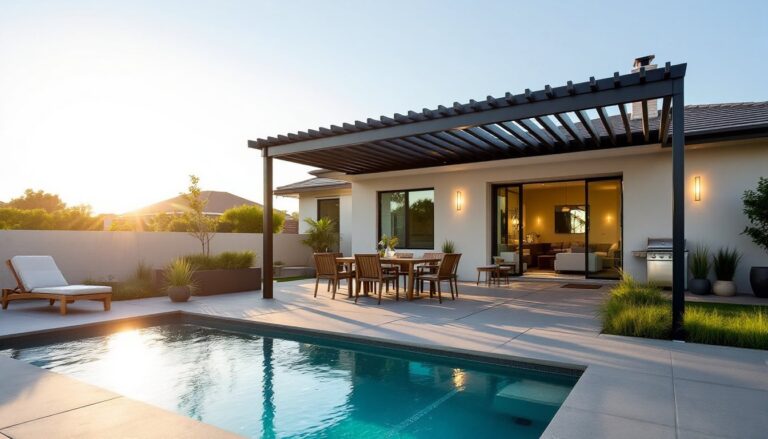
Minimalist pool design strips away ornamental elements in favor of clean lines, neutral color palettes, and geometric shapes. Think crisp edges, monochromatic decking, and simple water features, a style that works especially well in modern homes and compact yards.
The hallmark of this approach is a rectangular or angular pool with sharp corners and streamlined coping. Decking typically uses large-format pavers or concrete, often in gray, charcoal, or white tones. Water depth is usually consistent, and circulation systems stay hidden beneath integrated skimmers and floor drains.
Minimalist pools work best with limited plantings, perhaps a few specimen trees or a low, clipped hedge for screening. The restraint in design creates visual breathing room and emphasizes the water itself. From a practical standpoint, minimalist pools are often easier to maintain because there are fewer crevices, corners, and ornamental surfaces where algae can hide or debris collects.
Cost-wise, minimalist designs can run $40,000–$80,000 for a modest 15×30-foot pool, depending on regional labor rates and whether you include heating or advanced filtration. The simplicity can actually save money on landscape embellishment, though quality materials for decking won’t be cheap. One caveat: this style demands precision in construction. Visible water lines and uneven decking are far more noticeable against a plain backdrop than in a busier design.
Resort-Style Tropical Designs
Resort-style pools channel the languid atmosphere of a Caribbean or Hawaiian retreat, complete with lush plantings, natural stone, and water features that mimic waterfalls or grottos. This design embraces abundance, curves, and the integration of multiple water features to create a narrative landscape.
Key elements include curved pool edges, natural stone coping (often travertine or slate), and surrounding plantings of tropical or subtropical species depending on your climate zone. Many resort designs feature a separate spa or hot tub connected via spillover features, rock gardens, and generously sized decking for lounging. Water features might include a sheer descent waterfall, laminar jets, or bubblers integrated into the coping.
Tropical pools benefit from existing mature trees and dense screening. Palms, ferns, ornamental grasses, and flowering shrubs create an immersive environment that feels removed from daily life. Lighting, underwater, pathway, and accent, plays a crucial role in tropical designs, turning evening swims into theater.
Maintenance is more complex here. More surface area (the spa, waterfall, rocks) means more spots for algae growth and debris accumulation. Tropical plantings also shed leaves and flowers into the water, so you’ll need a robust circulation system and regular skimming. Budget $60,000–$150,000+ depending on size, materiality, and landscape scope. Tropical designs also pair well with integrated outdoor kitchens or bars, which ups the cost but creates a true gathering hub. Consider checking out tropical outdoor living spaces for landscape inspiration that complements your pool.
Sustainable and Eco-Friendly Options
Eco-conscious pool design prioritizes water conservation, energy efficiency, and reduced chemical dependency. These pools use advanced filtration, renewable heating, and sometimes even saltwater or natural filtration systems.
Variable-speed pumps can cut energy consumption by 75% compared to single-speed models by adjusting flow rates based on actual demand. Solar pool heaters leverage seasonal sun to maintain water temperature without grid electricity, though they require substantial roof or ground space. In northern climates, a solar cover extends the heating window and reduces evaporative water loss.
Saltwater chlorination (using a salt chlorinator rather than manual chlorine addition) reduces harmful chemical buildup and is gentler on skin and equipment. Some advanced systems employ UV or ozone treatment alongside minimal chlorine, further reducing chemical load. Natural pools use planted filtration zones that mimic wetland ecosystems, truly low-maintenance once established, though they require 20–30% of the pool’s surface area dedicated to plantings and deeper integration with landscape design.
Water conservation is critical. Covers reduce evaporation dramatically: a pool loses roughly 1,000 gallons per month to evaporation in warm climates. Rainwater harvesting systems can offset some water needs. From a cost perspective, eco-friendly systems carry upfront premiums, expect $50,000–$120,000 for a sustainable 15×30 pool with solar heating and advanced filtration, but lower operational costs offset initial investment over 5–10 years. Building codes in many regions now incentivize or require certain energy-efficient equipment, so check local regulations before design.
Smart Pool Technology Integration
Automation and Control Systems
Smart pool systems let you monitor and control filtration, heating, lighting, and chemical balance from a smartphone. This technology ranges from simple WiFi-enabled timers to fully integrated systems that adjust chemistry in real-time and alert you to equipment problems before they occur.
A smartphone app connects to sensors throughout the system, displaying water temperature, chlorine levels, pH, alkalinity, and pump run-time. You can remotely turn equipment on and off, schedule filtration during off-peak power hours, and adjust underwater LED lighting from anywhere. Some systems integrate with home automation ecosystems like Amazon Alexa or Apple Home, letting you voice-control pool features alongside other home systems.
Chemical automation takes a step further: automated dosing systems measure pool chemistry every 4–8 hours and inject precise amounts of chlorine, acid, or alkalinity adjusters. This maintains more stable water conditions and reduces the risk of under- or over-chlorination that plagues manual approaches. Integration with your home’s water system means automatic top-off when evaporation drops levels, preventing damage to equipment.
Installation typically runs $2,000–$8,000 depending on system complexity, though smart features add 10–15% to total pool cost. The payoff comes from reduced maintenance labor and fewer chemistry-related headaches. Note that all systems require stable WiFi coverage near the pool, weak signals lead to intermittent data and missed alerts. Check installer credentials: not all pool techs have experience integrating smart systems, and poor installation wastes their benefits. Look into comprehensive pool maintenance guidance to understand what these systems monitor.
Multi-Functional Entertainment Spaces
Integrating Fire Features and Seating Areas
Modern pools increasingly anchor complete outdoor entertainment zones, not just a place to swim, but to gather, dine, and linger after dark. Multi-functional designs layer pools, fire features, kitchens, dining areas, and lounge zones into a cohesive landscape.
Fire features are the centerpiece of evening ambiance. Freestanding or built-in fire bowls, pits, or linear fire tables provide warmth and visual drama while guests socialize. Placement matters: position fire features at least 10–12 feet from the pool edge and away from hanging branches or structures. Natural gas fire pits are most practical for permanent installations, they ignite instantly, produce no smoke, and integrate into hardscape designs. Propane alternatives offer flexibility for repositioning and work in rental properties, though the equipment footprint is larger.
Seating arrangements should follow the pool’s edges and orient toward water views and fire features. Built-in bench seating along decking edges, freestanding lounge chairs, and sectional outdoor furniture create multiple gathering zones. Consider sight lines and foot traffic: position seating so guests can see into and across the pool without blocking circulation paths.
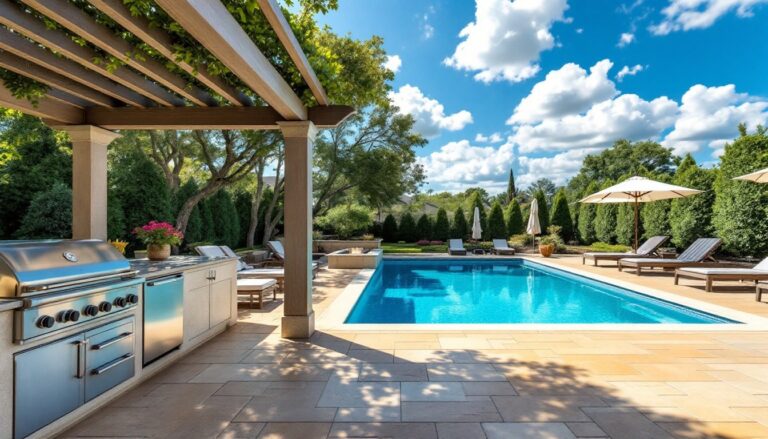
Outdoor kitchens elevate entertainment capability, a simple setup (grill, mini fridge, counter space) costs $5,000–$15,000, while full kitchens with range, dishwasher, and storage hit $20,000–$50,000+. All outdoor kitchen elements must meet local building codes about ventilation, electrical clearance, and material fire ratings.
Lighting transforms pools and gathering spaces after sunset. Underwater LED pool lights are standard: color-changing options add drama without extra infrastructure cost. Deck and pathway lighting ensures safe footing and highlights landscape features. String lights or pendant fixtures over dining or lounge areas create intimate ambiance. Consult local codes, some jurisdictions require minimum footcandle levels for safety compliance. Check resources like The Spruce’s outdoor design guides for layered lighting strategies that balance safety and aesthetics. Many multi-functional designs also benefit from professional landscape integration: consider consulting a designer to maximize flow between zones.