Table of Contents
ToggleA pool sits in your backyard, but does it feel like an escape or just a container of water? The difference lies in landscaping. Smart pool landscape ideas <a href="https://ninadolcetti.com/home-pool/”>transform that rectangle into a resort-style retreat where you actually want to spend time. Whether you’re working with a small urban lot or sprawling suburban acreage, thoughtful hardscaping, plant selection, and ambient features turn your pool area into an extension of your home that guests will envy and your family will use year-round. Let’s walk through seven proven approaches that blend function, aesthetics, and practical maintenance, no Pinterest fantasy required.
Key Takeaways
- Transform your backyard pool landscape ideas into a resort-style retreat by combining thoughtful hardscaping, strategic plant selection, and ambient features that enhance both function and aesthetics.
- Choose slip-resistant, non-porous materials like porcelain pavers or composite decking for pool decks—they resist chlorine damage and freeze-thaw cycles better than standard concrete or natural stone.
- Create shade and comfort with permanent structures like pergolas positioned on west and south sides, paired with layered seating and built-in benches to encourage guests to linger.
- Incorporate underwater LED lights and low-deck lighting for safety and ambiance after dark, ensuring all fixtures within 5 feet of water are GFCI-protected per the National Electrical Code.
- Extend your pool season with a fire pit or outdoor fireplace positioned 15+ feet from structures, providing warmth for fall and spring gatherings while following local fire codes.
- Use native and drought-tolerant plants adapted to your climate zone with drip irrigation on timers to minimize maintenance costs, water usage, and landscape upkeep while maintaining visual appeal.
Create A Tropical Escape With Lush Greenery and Water Features
Going tropical doesn’t mean you live in Florida. Strategic plant layering and water features create the vibe anywhere. Start with a canopy layer: tall palms, ornamental grasses, or bamboo screens set the backdrop and provide privacy. Mid-story plants like elephant ears, bird of paradise, or flowering shrubs add texture and seasonal color. Keep ground-level plantings sparse around the pool deck itself, wet leaves and flowers create slip hazards and end up in the water.
Water features amplify the tropical feel without requiring constant maintenance. A small fountain or sheer descent waterfall off an elevated planter adds ambient sound and movement. These don’t need electricity: a recirculating pump (usually 12V solar or 110V plug-in) keeps water flowing continuously. The key is placement: position features where they won’t spray directly onto the pool deck and create slippery spots.
For a backyard pool landscape ideas refresh, consider adding a rain shower fixture mounted on a pergola frame. This creates drama without the cost of a full waterfall installation. Choose plants native to warm climates, they’re tougher in heat and direct sun. Ensure drainage around plant beds: standing water near the pool edge invites mosquitoes and promotes rot.
Hardscape Your Pool Area With Contemporary Pavers and Decking
The deck surrounding your pool takes more abuse than any other outdoor surface: chlorine splashes, bare feet in scorching heat, furniture weight, and constant moisture. Choose materials that can handle it and won’t turn into a skating rink.
Porcelain pavers outperform standard concrete and natural stone for pool decks. They’re slip-resistant, non-porous (so chlorine doesn’t stain), and won’t crack under freeze-thaw cycles. Sizes like 24″ × 24″ or 12″ × 24″ feel contemporary and are easier to lay than small formats. Leave ¼-inch grout joints and use epoxy or polymeric grout (not standard cement mortar, which fails in wet conditions).
Composite decking (plastic-wood blends like Trex or Timbertech) handles moisture brilliantly and never needs staining. It’s warmer underfoot than stone, though in intense sun it can get hot. Bamboo decking is another option if you accept that it requires regular sealing and will eventually soften in standing water.
Natural stone works if you’re willing to maintain it. Travertine feels warm and looks elegant but is porous and softens over time. Slate is slippery when wet unless honed. Always slope your deck edge toward the pool or a drain, puddling water is a safety hazard and damages sub-base materials.
Install a pool renovation ideas plan that accounts for deck width. A minimum 6-foot deck gives you space for loungers and foot traffic: 10 feet is more comfortable. Beneath pavers, lay compacted gravel or recycled asphalt, then sand, then the pavers, this lets water drain and prevents frost heave.
Design A Resort-Style Retreat With Lounge Areas and Shade Solutions
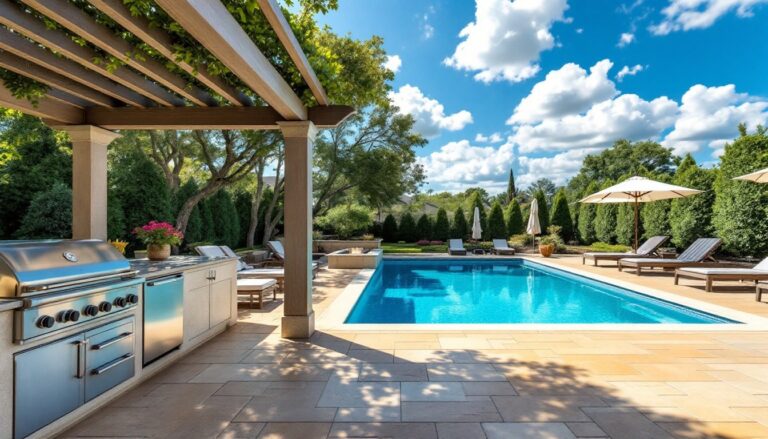
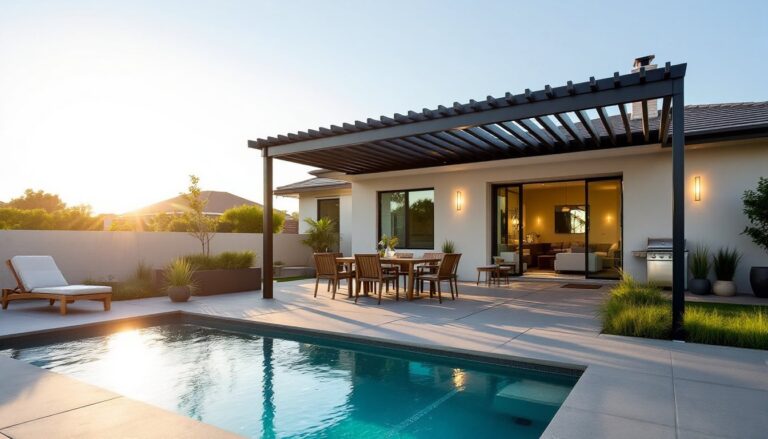
A resort feel comes from comfort and relief from the sun. Start with permanent shade: a pergola, shade structure, or trees positioned on the west and south sides of your deck. Open-beam pergolas let light through while filtering harsh rays: solid shade sails or retractable awnings block 85%+ of UV. Position a pergola so it doesn’t shade your pool, you want the water to sparkle, just the lounging area protected.
Layered seating creates the resort vibe. A built-in bench against a privacy fence, paired with lounge chairs and a low side table, says “stay awhile.” Concrete or composite benches are durable and maintenance-free: cushioned seating requires covers in rain and fades over seasons.
Incorporate a shallow shelf or sun shelf inside the pool, usually 6-12 inches deep along one edge, for sitting or for float lounges. This is a major comfort upgrade and doesn’t require draining or cutting into existing structure if you plan during initial construction.
Add a outdoor kitchen or wet bar if budget allows: a small prep counter, grill, and beverage cooler turn pool days into full-day events. Keep the footprint modest to avoid overwhelming the deck. Consult local building codes, some require permits for permanent outdoor cooking structures. A simple rolling cart is a budget alternative and stays portable.
Incorporate Lighting and Night Ambiance Into Your Pool Landscape
Lighting does double duty: safety and ambiance. Without it, your pool area becomes a hazard after dark. With it, you’ve extended your usable season by hours every evening.
Underwater LED lights have become the standard. Retrofit kits slip into existing niche fittings and last 50,000+ hours. RGB (color-changing) versions let you dial up mood lighting for parties or soft blue for evening swims. Install these during pool construction if possible: retrofitting means draining or working with the water present.
Deck lights mounted low on posts, steps, or garden beds mark pathways and prevent stumbles. LED step lights (rated IP67 or higher for water resistance) consume almost no power and integrate cleanly into stairs or risers. Solar deck lights are convenient but fade quickly: wired 12V or 110V systems are more reliable.
Ambient lighting overhead sets the tone. Pendant lights on the pergola, uplighting on trees, or string lights strung overhead create warmth without glare. Use warm white (2700K-3000K) LEDs rather than cool white: warm light feels more inviting and doesn’t attract as many insects.
Consult the National Electrical Code (NEC) for outdoor lighting: lights within 5 feet of water must be GFCI-protected, and pool lights require proper burial depth and conduit if hardwired. A licensed electrician should handle anything beyond solar or low-voltage systems. Test lighting in the evening before finalizing layouts, what looks good at noon may create shadows or glare at sunset.
Add Fire and Warmth With Outdoor Fireplaces and Fire Pits
A fire feature extends your pool season into fall and early spring. Cold evenings near water feel colder than they are, a nearby fire pit or fireplace changes that entirely.
Fire pits are the easiest DIY option. A steel ring or pre-cast concrete ring (36-48 inches diameter) set on a gravel base, surrounded by hardscape, gives you a focal point and warmth. Keep the pit 15+ feet from structures and flammable plants per most codes. Ensure a clear 10-foot diameter of non-flammable surface around the pit.
Outdoor fireplaces are pricier but more sophisticated. Pre-fabricated kits (often modular stone or steel) assemble faster than custom masonry. They’re better for poolside because they vent heat upward and can be positioned to warm specific lounge areas. A fireplace requires a solid foundation, proper clearances from wood structures, and in most jurisdictions, a building permit and inspection.
For either, use hot tub decks and patios style principles: place the feature where wind won’t blow smoke into the house or pool area. Never burn treated wood, plywood, or painted materials, they release toxins. Hardwoods like oak and maple burn hotter and longer than pine.
Check local fire codes before building. Some municipalities ban open flames entirely or restrict them to certain times of year. A gas-powered outdoor fireplace sidesteps smoke and ash but requires a propane line or tank, and permits still apply.
Use Native Plants and Drought-Tolerant Options for Low-Maintenance Landscaping
Tropical fantasy plants look great for two weeks, then struggle and demand constant watering. Native and drought-tolerant species thrive with minimal input, and they cost less in water and effort.
Research plants adapted to your climate zone (check USDA hardiness zones and local extension offices). In arid regions, sedums, agaves, ornamental grasses, and salvias give color and texture while using 50-70% less water than tropical plants. In temperate zones, native shrubs like serviceberry, butterfly bush, or clethra offer interest without fussiness. Avoid water-hungry plants like hydrangeas if you’re in a dry climate.
Ground covers and xeriscaping principles reduce maintenance: mulch beds with 2-3 inches of wood chips (not dyed red or black, which fade and wash into the pool), space plants wider than you’d normally, and let them mature rather than crowding. Group plants by water needs, dry-loving plants separate from moisture-tolerant ones, so your irrigation isn’t over- or under-watering any section.
Drip irrigation on a timer beats hand-watering for consistency. Run lines along the ground under mulch: they last 3-5 years before UV and root punctures require replacement. Soaker hoses are cheaper and easier to reconfigure than drip lines but clog more easily.
According to garden ideas for poolside planting, strategic placement of layered native plants reduces glare, softens hardscape edges, and creates a cohesive resort feel without the water bill. For persistent wet zones (near rain gutters or downspouts), choose moisture-loving natives. For sunny, dry spots near the deck, go drought-tolerant.
Conclusion
A great pool landscape isn’t about following trends, it’s about creating a space that you actually use and enjoy. Whether you prioritize lush plantings, clean hardscape, ambient lighting, or fire-warmed evenings, the best approach combines function and beauty. Start with one or two elements (a pergola and shade structure, or native plants and better lighting), then build from there. Your pool becomes not just a summer amenity but a year-round gathering place that feels like a genuine escape.