Table of Contents
ToggleA stock tank pool, that galvanized steel trough originally designed for livestock, has become the darling of backyard design. It’s affordable, quick to install, and surprisingly stylish. But plop one in your yard and you’ve got bare ground around it. A thoughtfully designed stock tank pool deck elevates the whole setup from “functional” to “Instagram-worthy” while solving real problems like mud, drainage, and safety. Whether you’re working with a tight budget or planning a weekend retreat, these seven deck ideas show you how to frame your pool with style and practicality.
Key Takeaways
- Stock tank pool deck ideas range from rustic wooden surrounds and permeable paving to composite materials, each offering different balances of cost, durability, and aesthetics.
- Pressure-treated lumber remains the classic choice for stock tank pool decks, requiring solid support posts set 16 inches on-center and positioned 6–8 inches above the pool rim for safe entry.
- Multi-level tiered platforms and angled designs create visual impact and improve drainage while transforming a basic pool setup into a sophisticated outdoor retreat.
- Permeable ground-level options like pavers, gravel, and recycled rubber tiles eliminate puddles around your stock tank pool while reducing maintenance compared to sealed surfaces.
- Strategic landscaping, integrated lighting, and finishing touches like non-slip tape, shade structures, and storage solutions turn a functional deck into an inviting, safe outdoor living space.
- Composite and recycled plastic lumber offer splinter-free, low-maintenance alternatives that last 25+ years, making them ideal for permanent fixtures in wet climates.
Rustic Wooden Deck Surrounds
Pressure-treated lumber is the go-to for stock tank pool decks because it resists rot and handles moisture. A simple 2×6 or 2×8 decking around the pool perimeter works fast and looks classic. You’ll want to pour concrete piers or use deck blocks (4×4 posts set 16 inches on-center) to keep the frame from settling unevenly as the ground shifts.
Keep the boards roughly 6–8 inches above the pool rim for safe entry and exit. Sand the surface smooth and apply a water-resistant stain or sealer every 2–3 years to prevent splinter hazards and UV damage. If you’re building on sloped terrain, a slightly elevated platform on one side adds visual interest and helps with drainage.
Wood offers flexibility, you can stain it dark for contrast against light tanks, or go natural for a bohemian feel. Build in bench seating or a low railing on one or two sides if the deck is 30 inches or higher: most jurisdictions require a 4-inch sphere rule (nothing larger can pass through) for safety.
Permeable Paving and Ground-Level Options
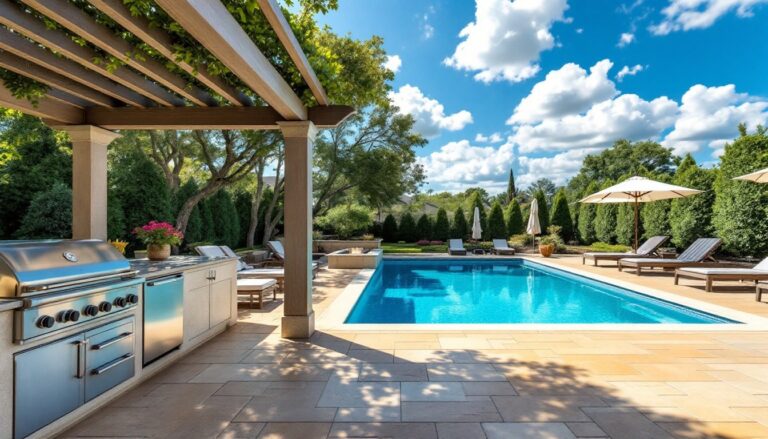
Not every pool deck needs to be elevated. If you prefer a flush, ground-level surround, permeable pavers or gravel let water drain instead of pooling. Permeable concrete pavers sit directly on a compacted gravel base (4–6 inches) with no adhesive, so they shift with the ground without cracking.
Gravel, pea gravel or river stone, is cheap and fast. Rake it level, edge it with landscape edging or a low border (pressure-treated 2×4 works), and refresh it annually as it migrates. The downside: bare feet can get hot on dark stone, and it eventually mixes into lawn and pathways.
Pavers offer a middle ground. Permeable plastic grids filled with gravel or mulch integrate into landscaping while containing materials. For a more finished look, consider permeable asphalt or recycled rubber tiles, both drain well and are gentler underfoot. Edge the surround 3–4 feet from the tank rim to catch splashes and create a defined zone. Ground-level designs shine when paired with outdoor entertaining decks that encourage barefoot flow and informal gatherings.
Composite and Low-Maintenance Materials
If splinter-free, no-stain-required appeal calls to you, composite decking offers durability at a price. Composite boards (wood-plastic blends) won’t rot, splinter, or need annual sealing. They’re ideal for wet climates or if you’re building a permanent fixture you don’t want to babysit.
Composite costs 2–3 times more than pressure-treated wood but lasts 25+ years versus 10–15 for wood. Popular brands offer color options that don’t fade quickly. Install them on the same joist and pier system as wood, composites need solid support underneath, not just direct ground contact.
Another low-fuss choice is recycled plastic lumber, which mimics wood grain without the upkeep. It’s lighter than composite, won’t absorb water, and handles freeze-thaw cycles well. The trade-off is aesthetics, some people find the plastic finish less warm than real wood. For finishing touches, check deck finishing guides to understand sealing and maintenance expectations before choosing materials.
Multi-Level Deck Designs for Visual Impact
A single flat platform around your stock tank feels basic. Stepping it up, literally, creates depth and breaks the visual monotony.
Tiered Platform Layouts
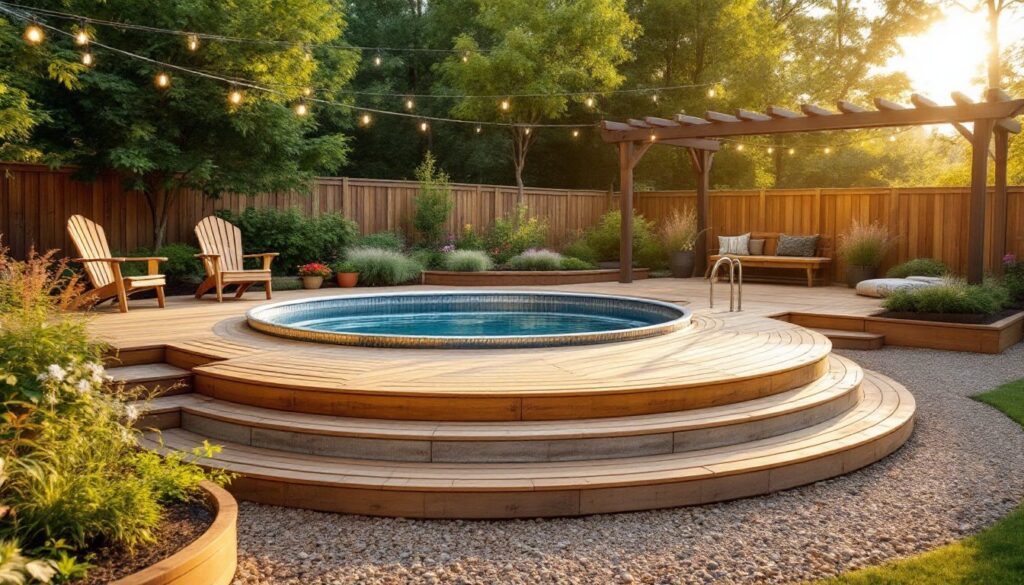
Imagine a 2-foot-wide platform around the tank at ground level, then a secondary deck step 8 inches higher that extends 6–8 feet outward. The upper level becomes a lounging zone, observation point, or conversation pit. You’ll need a second set of joists and proper load calculations, especially if multiple people gather there simultaneously.
Build the upper platform on 4×4 posts sunk 24–30 inches into frost-protected holes (check your local frost line, frost heave will destroy a deck if footings aren’t deep enough). Connect the two levels with a short ramp or two to four steps, depending on slope. Non-slip treads on steps are critical: someone wet from the pool will slip on smooth wood.
Angled platforms (one side higher than the other) create visual drama and improve drainage. Use 45-degree corners instead of right angles, softer geometry suits the organic shape of a tank. Tiered designs pair beautifully with landscaping and lighting for a refined outdoor resort vibe.
Landscaping Integration and Greenery
A pool deck doesn’t exist in a vacuum. Framing it with plantings softens hard edges and creates privacy from neighbors. Plant taller shrubs (butterfly bush, lilac, or ornamental grasses) on the property line side: shorter perennials and ground covers closer to the deck.
Keep plants 18 inches back from the deck edge so foliage doesn’t trap moisture against wood, a recipe for rot. Avoid dropping leaves into the tank: cleanup becomes tedious. Deciduous trees planted on the west side provide summer shade while letting winter sun through. Use mulch (2–3 inches deep) around plantings to retain moisture and suppress weeds.
Raised planter beds near the deck add color and texture without fussy maintenance. A 2-foot tall bed in the corner becomes a focal point. Consider designs similar to simple deck designs that emphasize clear sightlines and plant placement. Landscape lighting integrated into planting areas (path lights along bed edges, uplights on focal shrubs) creates mood while improving safety after dark.
Lighting and Finishing Touches
Once the sun sets, your deck’s usefulness ends without proper lighting. Low-voltage LED path lights (12-volt systems) cost little and install easily, just run a weatherproof cable from a transformer and stake lights along deck edges or planting beds. They won’t blind anyone poolside but mark edges and steps clearly.
String lights strung overhead create ambiance. Use weather-rated commercial-grade string lights (not indoor decorative ones): they’re built to handle moisture and UV. Anchor them to posts or trees at least 8 feet high to keep the beam high and maintain sightlines. Avoid fixtures directly above the pool, reflected light and falling insects in water aren’t fun.
Low-voltage spotlights highlight architectural features or plantings. A single uplighter on a focal shrub or rock feature changes the entire nighttime vibe. Install a timer or smart switch so lights come on automatically, convenience and security in one. For comprehensive planning, review deck lighting resources that detail wiring, brightness levels, and fixture placement.
Small details matter: non-slip tape on wet steps, hooks for towels, a rinsing station (low-flow shower or garden hose on a reel), and weatherproof seating (Adirondack chairs or a teak bench). Storage for pool chemicals, cleaning tools, and cushions keeps clutter hidden. A little shade, a pergola, shade sail, or market umbrella in a base, makes the deck usable during hot afternoons. Design resources like Gardenista and Southern Living showcase inspiring finishes and furniture pairings that elevate simple decks into cohesive outdoor rooms.