Table of Contents
ToggleAn above ground pool is a smart investment for summer fun, but without a proper deck, you’re missing out on the full potential of your backyard. An oval pool deck doesn’t just add safety and functionality, it frames your pool as a real outdoor living destination. Whether you’re working with a modest 12-foot oval or a sprawling 18-footer, the right decking material and layout can transform your yard from a utilitarian pool setup into an inviting oasis where friends and family actually want to gather. Let’s explore design styles and practical solutions that work specifically for oval above ground pools.
Key Takeaways
- An oval above ground pool deck adds essential safety, weather protection, and transforms your backyard into a finished outdoor living space rather than a utilitarian setup.
- Composite decking offers low-maintenance durability for oval pool decks at $5–$12 per linear foot, resisting rot and fading without the seasonal upkeep that real wood requires.
- Wood decking delivers natural warmth and stays cooler underfoot than composite, but demands sanding and resealing every 2–3 years in wet pool environments.
- Concrete and permeable paving stones provide modern, durable functionality for oval pool surrounds, with costs ranging $5–$20 per square foot depending on material quality.
- Smart oval pool deck layouts use partial decking on high-use areas or vary deck width in wraparound designs rather than covering the entire yard, maximizing both usable space and efficient material use.
- Built-in features like planter boxes, benches, shade structures, and pergolas transform an oval pool deck from a simple platform into an inviting outdoor room for entertaining.
Why Deck Design Matters for Your Above Ground Pool
A deck does more than look nice around an oval pool, it’s essential infrastructure. It provides safe, non-slip access in and out of the water, protects your pool’s frame and structure from weather damage, and gives you defined space for lounging, grilling, or entertaining.
Most above ground pools sit on unlevel ground, so a deck helps compensate by creating a stable, level platform. It also buffers the pool from foot traffic that can degrade the liner and foundation. From a design perspective, a well-chosen deck material and layout make your pool feel intentional and finished, not like an afterthought plopped in the yard.
Oval pools present a specific challenge: they take up more yard width than round models, so you need smarter layouts to maximize usable deck space. Whether you’re adding shade structures, built-in seating, or planter boxes, the deck becomes the organizing element that ties everything together.
Composite Decking: Low-Maintenance Durability
Composite decking, a blend of wood fibers and plastic polymer, is increasingly popular for pool decks because it resists water damage, rot, and UV fading without the maintenance demands of real wood. A composite deck will not splinter, warp, or require annual sanding and staining.
Composite boards typically cost $5–$12 per linear foot (prices vary by region and brand), making them a mid-range option compared to pressure-treated lumber or exotic hardwoods. Installation is straightforward: composite boards attach to standard pressure-treated 2×6 or 2×8 joists spaced 16 inches on center, just like wood. You’ll need a power drill, a miter saw or circular saw for cuts, and basic deck hardware.
The main downside is that composite can get quite hot underfoot in direct sun, some homeowners install shade cloth or umbrellas to address this. Also, some budget composites can show mildew in shady, damp conditions, so lighter colors and adequate airflow help. Cleanups are simple: just hose it down or use mild soap and water. For an oval pool where you want hands-off decking, composite is a solid choice.
Wood Decking: Classic Warmth and Natural Appeal
Real wood decking offers aesthetic warmth that composite can’t match, and it stays cooler underfoot than composite or concrete. Pressure-treated southern pine or yellow pine are affordable and rot-resistant: cedar or redwood cost more but age beautifully and smell better. Hardwoods like cumaru or ipe are extremely durable but require specialized saw blades and are harder to work with as a first-timer.
Wood decking is forgiving during installation: you can cut and adjust as you go without worrying about cracking composite. A wood deck around an oval pool typically uses 1×6 or 5/4×6 deck boards on standard joists, with fastening via stainless steel or hot-dipped galvanized deck screws, always use corrosion-resistant fasteners near pools.
The catch: wood requires maintenance. Plan on sanding and resealing every 2–3 years in a wet environment. Costs run $3–$10 per linear foot for boards alone, plus finishes and time. If you love the look and don’t mind upkeep, wood delivers. Pro tip: let pressure-treated lumber acclimate for a week or two before installation to minimize cupping and warping.
Paving Stones and Concrete: Modern Functionality
Concrete and permeable paving stones deliver a clean, modern look and require minimal ongoing care. A concrete pad poured around an oval pool is durable and lets you apply stain, paint, or sealer for color and slip resistance, crucial near water. Costs typically run $5–$15 per square foot for materials and labor: DIY pours save labor but require proper grading and a concrete truck.
Permeable pavers or composite paving stones work well if you want defined edges without a continuous slab. They’re easier to repair (replace one stone instead of resurfacing concrete), and they drain water rather than pooling. Lay them on a compacted 4-inch gravel base with sand setting bed: they won’t shift much if you use an edge restraint and proper spacing. Costs range $7–$20 per square foot depending on stone quality and finish.
Concrete can develop cracks from frost heave in cold climates or from pool water freeze-thaw cycles, so proper slope for drainage (1/8 inch per foot minimum) is essential. Both options can get slippery when wet, so apply a non-skid sealer or coating. An oval pool surrounded by stamped or stained concrete looks polished and upscale: pair it with proper pool care practices and you’ve got a lasting investment.
Space-Smart Deck Layouts for Oval Pools
Oval pools force you to think differently about deck layout. Unlike a round pool where you can deck all the way around, an oval’s length means full wraparound coverage eats up your entire yard. Smart builders use partial decking, angled approaches, or hybrid layouts instead.
Partial Decking Solutions
Deck the short ends and long sides where people actually stand and lounge, leaving the back or one side open. A typical 18×34 foot oval pool might get decking on the 34-foot sides and both 18-foot ends, leaving the back open or planted. This uses material efficiently and keeps your yard functional for other activities.
Align deck boards parallel to the pool’s length for visual continuity. Run boards perpendicular to the pool if you want to emphasize width or create a modern, linear look. Use contrasting materials, say, a 4-foot-wide composite band along the waterline with a larger wood or stone surround, to define access points and break up visual monotony.
Wraparound Designs
If space allows, a full wraparound deck creates a resort feel and provides multiple lounging zones. For an oval pool, this typically works best on larger properties. Vary the deck width: 4–6 feet on the long sides (enough for lounge chairs and foot traffic), 6–8 feet on the short ends (space for table, cooler, or stand-up guests).
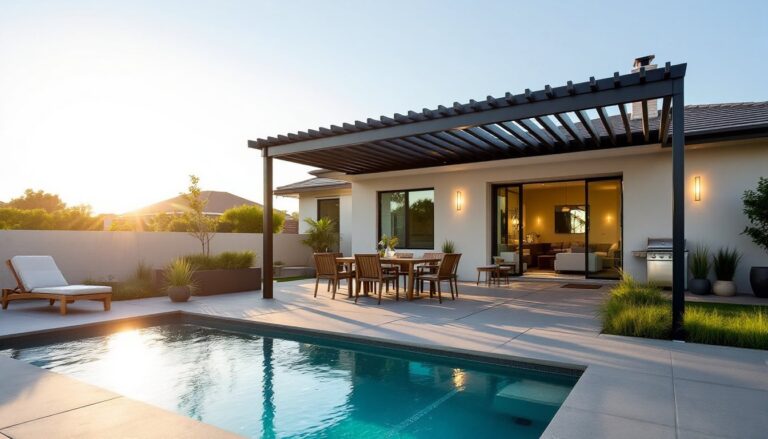
Incorporate built-in features to maximize usability: a 2-foot-wide planter box with shade-tolerant plants, a bench along one side, or a small storage box for pool supplies. Add a shade structure, pergola, shade sail, or retractable awning, to make the deck comfortable during peak sun hours. These touches transform a utilitarian platform into an actual outdoor room. Link wraparound designs to Backyard Decks and Patios for more inspiration on layout flow and furniture placement that mirrors professional design patterns.