Table of Contents
ToggleAn in-ground pool is one of the best backyard investments you can make, but the patio surrounding it makes or breaks the whole experience. The right design turns a functional swimming area into an outdoor living destination where family and friends actually want to spend time. Whether you’re starting from scratch or upgrading an existing deck, your choices in materials, layout, and style set the tone for everything from summer barbecues to quiet morning swims. This guide walks you through ten modern pool patio designs that work for different budgets, climates, and aesthetics, so you can find something that fits your actual life, not just Pinterest boards.
Key Takeaways
- A well-designed inground pool patio ideas should balance materials, layout, and style to transform your pool into an outdoor living destination your family actually uses year-round.
- Modern minimalist pool patios use clean lines, neutral-toned pavers, and minimal furniture to let the pool itself stand out as the focal point.
- Tropical oasis designs incorporate warm-toned natural stone, lush plantings at varying heights, water features, and pergolas to create vacation-like ambiance with dappled shade.
- Transitional pool patios blend natural and manufactured materials—such as limestone pavers with composite decking—to achieve visual interest and low maintenance.
- Smart patio zoning creates distinct lounging, dining, shade, and utility areas that improve traffic flow and make the space feel larger and more functional for entertaining.
- Budget-friendly updates like staining existing concrete, investing in quality pavers only for the immediate pool surround, and using DIY installation can deliver attractive results at 40-50% less cost.
Modern Minimalist Pool Patios
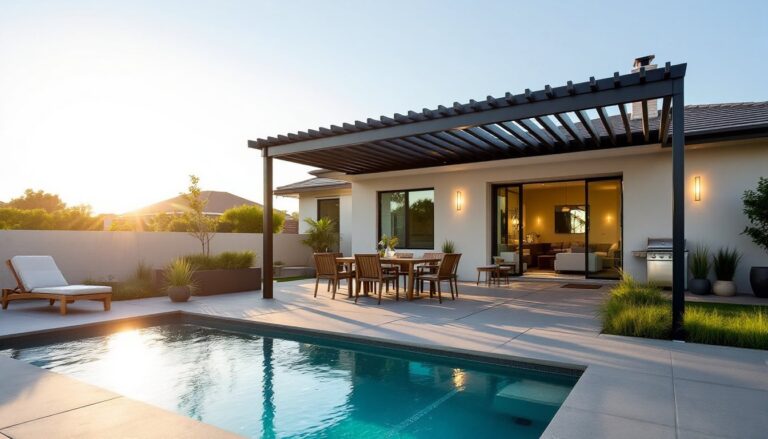
Minimalist pool patios focus on clean lines, open sight lines, and letting the pool itself be the star. Think concrete pavers in neutral tones, minimal furniture, and no visual clutter around the waterline.
The backbone of this style is a simple geometric layout. Most work best with a single material, polished concrete, large-format porcelain pavers (24×48 inches or similar), or light-colored travertine. These materials are low-maintenance, slip-resistant when properly finished, and don’t compete with the water.
Keep the hardscape color palette to two or three shades maximum. Pair a medium gray paver with white accent strips or a natural stone border. The idea is restraint, your eyes should move easily from the house to the pool without distraction.
Furniture should be minimal and functional. A few slatted lounge chairs in black or natural wood, a small side table, and that’s it. Avoid built-in seating areas, planters, or decorative features unless they serve a genuine purpose. Does a Pool Add Value to Your Home? explains how thoughtful patio design influences home value, and restraint often wins over overdone ornamentation.
Tropical Oasis Pool Surroundings
Tropical patios evoke vacation vibes with lush plantings, warm materials, and an abundance of shade. If you live in a climate with year-round warmth or just want to feel like you’re on holiday every time you step outside, this style delivers.
Start with warm-toned natural stone, think travertine, limestone, or sandstone in honey, tan, or russet hues. These materials feel organic and gain patina over time, enhancing the aged tropical look. Avoid bright white or cool grays: they flatten the vibe.
Planting is critical here. Incorporate tall palms (canary island date palms, queen palms, or bamboo palms depending on your zone), flowering shrubs like hibiscus, and dense ground covers. The goal is dappled shade and the sense that the patio disappears into the landscape. Layer plants at different heights to create depth.
Add water features if budget allows, a small fountain, a pondless waterfall, or even a rain barrel styled as part of the décor adds texture and sound. Designers at The Spruce have published many guides on tropical garden design that complement pool spaces well. Wooden pergolas draped in climbing vines provide overhead shade without the cost of a full structure, and they photograph beautifully. Lighting is essential: low-voltage landscape lights hidden in planting beds create ambiance at dusk without harsh overhead glare.
Transitional Patios With Mixed Materials
Transitional design blends contemporary and traditional elements, which translates perfectly to pool patios. You get visual interest without the commitment to a single aesthetic.
Combining Stone, Wood, and Composite Decking
The magic of transitional patios is mixing hard and soft materials. A typical approach: use natural stone pavers as the main border around the pool (offering slip resistance and a traditional feel), then transition to a composite deck in a warm gray tone further out. Composite won’t splinter, requires minimal maintenance, and won’t trap water like pressure-treated wood.
Wood accents, a pergola frame, bench seating, or privacy screens, warm the space. Use cedar or a composite wood-grain product rated for exterior use. These materials feel less sterile than stone alone while keeping maintenance realistic.
Mix one natural material with one manufactured one. For example: limestone pavers paired with composite decking and steel railings, or travertine combined with polished concrete for step-ups. The contrast reads as intentional, not mismatched.
Planting should be restrained but present. A line of ornamental grasses along one edge or a few specimen shrubs in custom planters adds life without overwhelming the hardscape. Mobile Home Patios and Decks provide inspiration for mixed-material layouts that work in tighter spaces, and the principle applies to pool areas too. Lighting is again key: solar step lights, LED string lights overhead, and recessed deck lights all work together to extend usability into evening.
Functional Patio Zones For Entertainment
Many homeowners forget that a pool patio needs multiple functional zones, not just a strip of space around the water’s edge. Smart zoning keeps traffic flowing and makes the space feel larger.
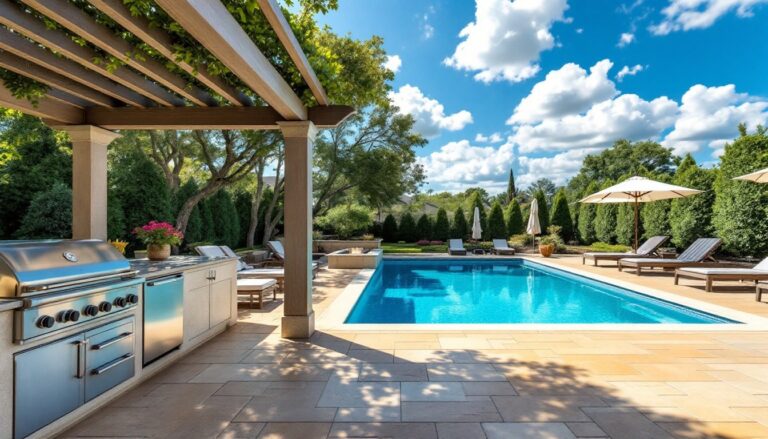
Create distinct areas: a lounging zone with seating and umbrellas near the pool: a dining zone slightly back with a table and chairs: a shade/retreat zone with a pergola or pavilion for breaks: and a practical zone near the house with a beverage station or outdoor kitchen element.
Each zone should be delineated by a shift in material or a slight elevation change. A step or a border of contrasting pavers signals you’ve entered a new area without requiring walls or fences. Use pavers to define the dining zone: shift to deck boards or stamped concrete for the lounge area.
Built-in seating along raised planters saves space and creates casual gathering spots. A bench with storage underneath serves double duty, seating and pool toy/cushion storage. Pergolas or shade sails over the dining area are practically mandatory if you’re entertaining during peak heat.
Covers for Decks and Patios discusses protective structures that work equally well for entertainment zones, extending your usable season and protecting guests from sun. Include a separate utility zone near the equipment pad if possible, screened from view, this keeps skimmers, filters, and hoses out of the main gathering area.
Budget-Friendly Patio Updates
You don’t need to spend $15,000+ to create a usable, attractive pool patio. Smart material choices and DIY-friendly approaches can deliver real results on a tighter budget.
Start with what you have. If your existing concrete pad is structurally sound, paint or stain it rather than tear it out. Concrete stain costs $100–300 and can last 5–7 years with proper sealing. It won’t look like natural stone, but it looks intentional and buys you time.
Choose one premium material and stretch it. Invest in quality pavers for the immediate pool surround, this is the high-traffic, most-visible zone. Use a less expensive material (poured concrete, stamped concrete, or even compacted gravel) for outer entertaining areas. Guests won’t notice the difference, and you’ll save 40–50% compared to premium materials throughout.
DIY-friendly approaches: A gravel path with treated lumber edging, composite deck boards installed over existing concrete footers, and painted or stained concrete all reduce labor costs. Hiring out excavation and prep work is smart: doing finish work yourself is where you save.
Landscaping on a budget: Small, fast-growing plants cost less than large specimens and fill in faster. Buy perennials (which return yearly) instead of annuals. One shade tree or pergola with climbing vines delivers impact at a fraction of the cost of extensive planting. Better Homes & Gardens offers seasonal plant guides and budget landscaping ideas applicable to pool surrounds. Add inexpensive features like solar lights, rope lighting, or painted wooden signs to create polish without very costly.
Conclusion
Your pool patio should reflect your lifestyle and budget, not a magazine cover. Whether you go minimal, tropical, transitional, or zone-focused, the fundamentals stay the same: choose slip-resistant materials, plan for maintenance, and design for how you actually use the space. Start with a clear layout, invest where it matters most (the pool surround and primary gathering area), and build out gradually. A well-designed patio turns your in-ground pool from a beautiful feature into a destination your household uses year-round.