Table of Contents
ToggleThe Twin Cities offer a unique canvas for luxury pool design, where year-round living meets outdoor elegance. A well-designed luxury pool isn’t just about water and concrete: it’s an extension of your home that balances stunning aesthetics with practical functionality for Minnesota’s climate. Whether you’re dreaming of sleek modern finishes, natural stone surrounds, or resort-style water features, building a luxury pool in Minneapolis or St. Paul requires thoughtful planning and an understanding of how design choices interact with cold winters, warm summers, and everything in between. This guide walks you through the key elements, climate-smart strategies, and actionable steps to create a backyard oasis that stands out in 2026.
Key Takeaways
- Luxury pool design in the Twin Cities requires climate-smart strategies like winterization, heated decks, and UV-resistant materials to withstand Minnesota’s freeze-thaw cycles and protect your investment.
- Premium materials such as travertine, porcelain pavers, colored plaster, and saltwater chlorination systems define a luxury pool’s aesthetic and durability, though they demand proper maintenance in cold climates.
- Visual impact features like LED underwater lighting, infinity edges, water features, and natural stone surrounds transform a basic pool into an Instagram-worthy backyard oasis that stands out.
- Year-round pool enjoyment in the Twin Cities is possible with pool enclosures, retractable roof systems, or high-quality heaters that extend the swimming season from April through October.
- Work with local designers, obtain proper permits, conduct soil tests, and budget $50,000–$150,000+ for construction plus $2,000–$5,000+ annually for maintenance and winterization to ensure success.
- Integrate luxury pool design into a cohesive outdoor living ecosystem with covered pavilions, built-in seating, outdoor kitchenettes, and strategic landscaping that creates functional gathering spaces.
Understanding Luxury Pool Design Elements
Luxury pools differ from standard residential pools in material quality, customization, and attention to detail. Think of it this way: a basic pool holds water, but a luxury pool tells a story and functions as a gathering space.
Premium Materials and Finishes
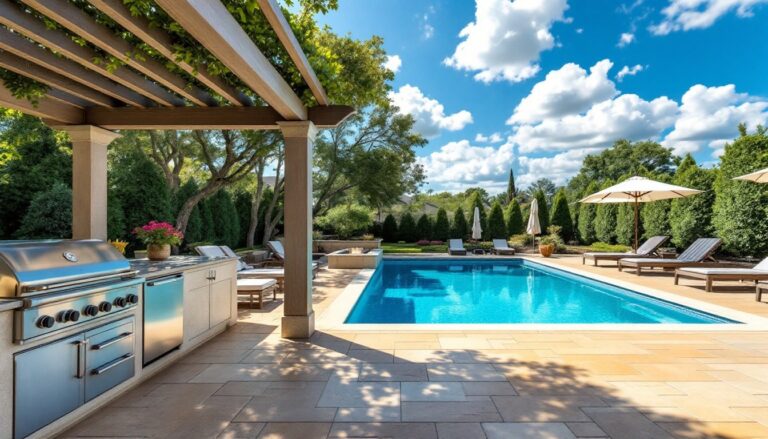
The foundation of luxury pool design starts with material choices. Travertine and natural stone finishes create that high-end resort feel, offering non-slip surfaces and distinctive visual appeal, though they require regular sealing in Minnesota’s freeze-thaw cycles. Porcelain pavers are another premium option, mimicking natural stone while offering better durability in cold climates.
Pool plaster isn’t what it used to be either. Colored plaster finishes (like Caribbean blue or granite) cost more upfront than standard white plaster but deliver that luxury appearance. Some designers opt for aggregate finishes that blend pebbles or quartz into the surface for texture and visual depth.
For the water itself, saltwater chlorination systems have become standard in luxury designs. They’re gentler on skin and reduce chlorine smell, a mark of refinement in high-end backyard spaces. But, salt systems require proper maintenance in Minnesota winters, particularly protecting the equipment from freezing.
Deck materials matter just as much. Luxury pools often feature permeable pavers (reducing runoff), composite decking (low maintenance), or high-grade pressure-treated lumber with built-in lighting. The goal is creating visual continuity while managing the harsh Minnesota climate.
Twin Cities Climate Considerations for Year-Round Enjoyment
Minneapolis-St. Paul winters drop well below freezing, and that reality shapes every luxury pool design decision. You can’t ignore climate, it’s foundational.
Winter drainage and equipment protection are non-negotiable. Most Twin Cities pools require full winterization: draining lines, removing pump equipment, and protecting plumbing from freeze damage. Some luxury installations feature heated loops in the deck surface, keeping entry and exit zones from becoming ice skating rinks even after the pool closes seasonally. A high-quality pool heater (gas or heat pump) extends the shoulder seasons, April through October swimming isn’t unrealistic with proper heating.
For truly year-round use, pool enclosures or retractable roof systems have grown popular among luxury homeowners. These let you swim in February if you’re willing to invest $30,000–$100,000+ in the structure. It’s a premium feature that transforms a seasonal amenity into year-round recreation.
Drainage design is critical in a climate with heavy snow melt and spring rains. Luxury pools include subsurface drainage systems and proper grading to prevent water from pooling around the deck and damaging foundations. This isn’t glamorous, but it’s essential for longevity.
Consider UV-resistant materials for any exposed components, the intense summer sun at 45° latitude fades colors faster than many homeowners expect. High-quality sealants and finishes hold up better over Minnesota’s five-month freeze season.
Creating Stunning Visual Features
Visual impact separates a luxury pool from a standard one. These features catch the eye and create those Instagram-worthy moments.
Infinity edges or negative-edge designs create that resort illusion where water appears to spill over the horizon. In a Twin Cities backyard, they work best on sloped lots and require precise engineering to handle Minnesota’s variable water levels through seasons.
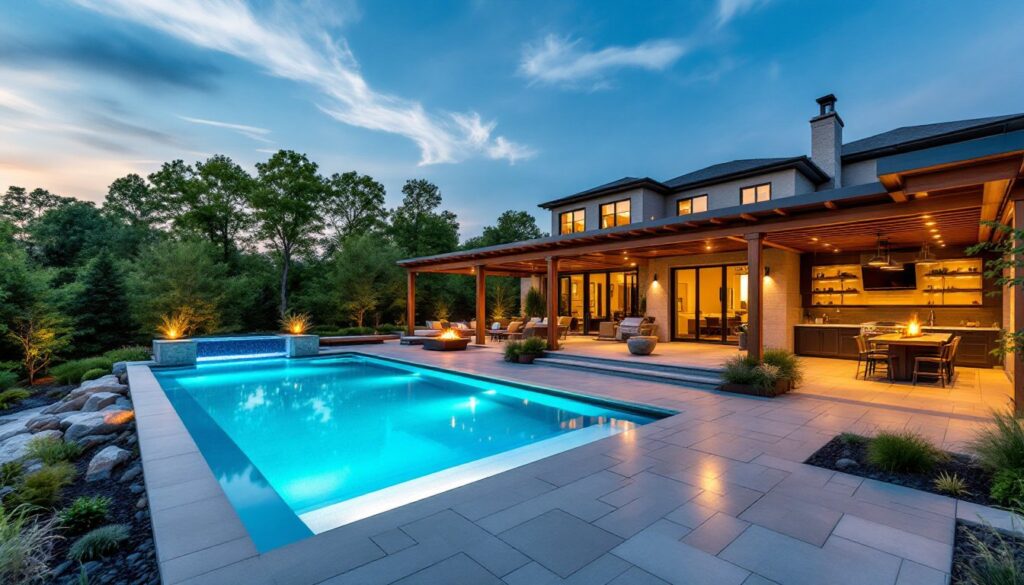
Lighting design is huge, and often overlooked. LED underwater lighting (now standard for luxury pools) creates ambiance, highlights design details, and improves safety. Adding landscape lighting around the deck and accent uplighting on nearby trees or hardscape extends visual appeal into evening hours. Smart-home integration lets you adjust colors and intensity from your phone.
Water features like spillover sheer descents, bubblers, or small water wall fountains add movement and sound. In winter, they freeze into sculptural ice formations that can actually look striking against snowy landscapes. But they require dedicated drainage in Minnesota’s spring thaw.
Tile work and mosaics along the waterline add personality. Some luxury designs incorporate custom tiles reflecting Minnesota themes, local artists, or personal aesthetics. These are durable investments that showcase craftsmanship.
Natural stone surrounds and boulders create visual continuity with the landscape. Rather than a stark concrete deck, layering in natural elements, river rocks, plantings, and stone benches, creates a cohesive outdoor room that feels intentional and high-end.
Integrating Outdoor Living Spaces
A luxury pool doesn’t exist in isolation. It’s part of a broader outdoor living ecosystem that your family actually uses.
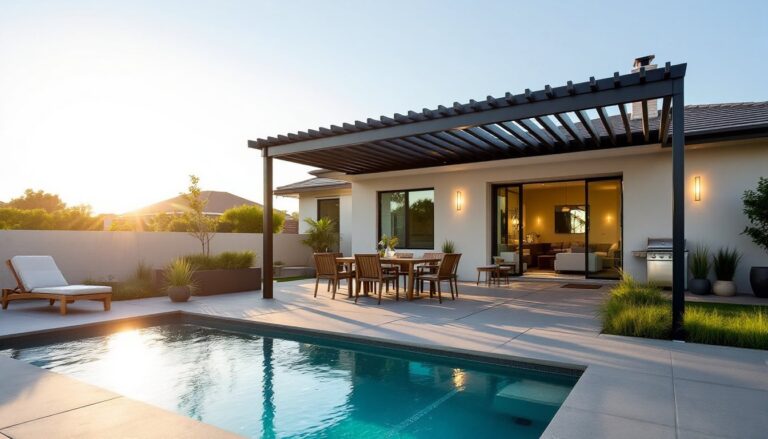
Covered pavilions or pergolas positioned near the pool provide shade, shelter from afternoon sun, and a focal point for entertaining. Materials matter here too, premium composite or cedar structures hold up better through Minnesota winters than budget alternatives. These structures often include ceiling fans, ambient lighting, and integrated sound systems for true resort functionality.
Built-in seating and conversation areas should encircle the pool’s perimeter. Stone or composite benches eliminate the need to haul out yard furniture, while fire tables or outdoor fireplaces extend the usable season into cool evenings. A luxury design treats the entire outdoor space as “rooms”, the pool is one, the lounge area is another.
Kitchenettes or outdoor bars near the pool make entertaining seamless. Stainless steel grills, mini fridges, and water features turn a backyard into a destination where guests actually want to linger. These installations require gas and electrical work, often necessitating permits and licensed contractors.
Landscaping integration is the glue holding everything together. Pool renovation ideas sometimes start with existing plants, but luxury designs often include strategic plantings for privacy, wind screening, and visual balance. Native Minnesota shrubs and perennials reduce maintenance while thriving in local conditions.
Pathways and transitions between spaces matter. Connecting a luxury pool area to the main house with thoughtful paving, lighting, and plantings creates intentional flow rather than scattered elements.
Practical Steps to Bring Your Luxury Pool Vision to Life
Designing a luxury pool in the Twin Cities is a multi-phase process. Here’s how to move from idea to reality:
1. Work with a local designer or architect. This isn’t optional for luxury-level work. You need someone who understands Minnesota codes, soil conditions, freeze-thaw impacts, and how to integrate a pool into your specific lot. Expect design fees of $3,000–$10,000+, but this investment prevents costly mistakes.
2. Get a site survey and soil test. Drainage, subsurface conditions, and winter water table issues are invisible until they cause problems. A professional assessment reveals whether your lot can support the design you want.
3. Check permits and zoning. Most Twin Cities municipalities require permits for pools larger than certain sizes (often 400 square feet, though rules vary). Setback requirements, neighbor easements, and building codes matter. Permits cost $500–$2,000 but protect you legally and ensure inspections at critical stages.
4. Plan for winterization from day one. When the contractor designs plumbing runs and equipment placement, they should account for freeze protection. Backflow preventers, proper slopes, and accessible shut-offs save thousands in damage later.
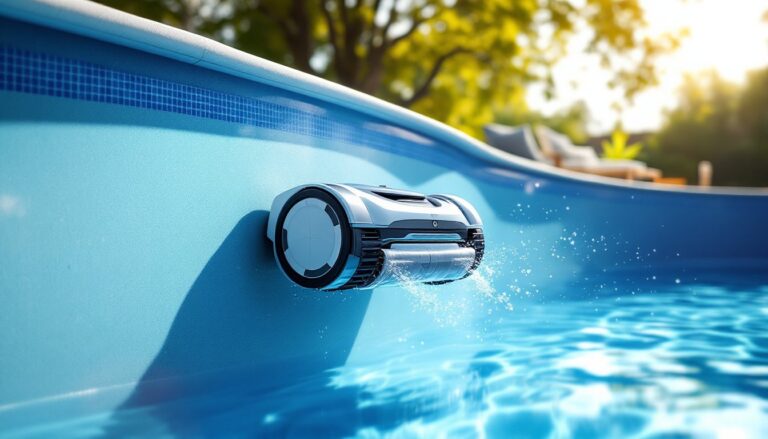
5. Consider hiring commercial pool maintenance specialists even for residential pools. Luxury pools demand expertise beyond typical DIY care, especially in Minnesota’s climate. Many Twin Cities homeowners contract seasonal maintenance, which averages $2,000–$4,000 annually for opening/closing and mid-season care.
6. Get multiple bids from licensed pool contractors. Pool construction is specialized work requiring proper licensing and insurance. Compare proposals not just on price but on warranty, post-construction support, and winter care recommendations.
7. Factor in ongoing costs realistically. Luxury pools cost $50,000–$150,000+ to build in the Twin Cities (depending on size, materials, and features). Annual maintenance, heating, repairs, and winterization run $2,000–$5,000+. Insurance premiums increase by $200–$500 yearly. Budget accordingly.
Conclusion
A luxury pool in the Twin Cities represents a significant investment, but it transforms how your family lives outdoors during warmer months and adds lasting value to your property. Success depends on understanding Minnesota’s climate, choosing durable materials, integrating design with function, and working with experienced professionals. Whether you’re starting from scratch or planning pool maintenance Miami considerations adapted to northern climates, the foundation remains the same: thoughtful design rooted in practical reality. Your backyard oasis awaits, start with a solid plan.