Table of Contents
ToggleA pool is an investment in relaxation and entertainment, but its impact stops abruptly at the water’s edge without a well-designed pool deck. Concrete has become the go-to material for modern pool decks, and for good reason. It’s durable, versatile, and surprisingly stylish when you move beyond the gray monotony of decades past. Whether you’re starting from scratch or refreshing an existing deck, contemporary concrete pool deck ideas offer practical solutions that balance aesthetics with real-world wear. In 2026, homeowners are ditching uninspired surfaces in favor of finishes that complement their outdoor living spaces while standing up to sun, chlorine, and foot traffic. This guide walks through why concrete makes sense, what design styles work today, and how to keep your investment looking sharp for years to come.
Key Takeaways
- Modern concrete pool deck ideas offer durability, versatility, and style by resisting freeze-thaw cycles, chlorine, and UV damage better than wood or other traditional materials.
- Minimalist designs with clean lines and geometric scoring create a contemporary aesthetic that frames the pool as the focal point while remaining easy to maintain.
- Textured finishes like acid-stained concrete, stamped patterns, and exposed aggregate add visual interest and luxury without overwhelming the space.
- Neutral color tones (warm grays, sand, taupe) hide dirt and complement landscaping, while water-based or acid stains provide subtle, age-resistant color options that won’t date quickly.
- Regular sealing every 2–3 years and moderate pressure washing are essential for protecting your concrete pool deck investment and extending its lifespan to 5–7 years between refreshes.
- Proper site preparation and professional installation create a level, stable surface that avoids the settling and gap issues common with laid materials like pavers.
Why Concrete Is the Ideal Pool Deck Material
Concrete offers advantages that wood, pavers, and other alternatives struggle to match. It withstands freeze-thaw cycles, chlorine exposure, and UV damage far better than most materials. Unlike wood decks, concrete doesn’t splinter, rot, or require annual sealing (though a quality sealant extends its life). It’s also slip-resistant when finished correctly, a critical safety feature around water. Installation is faster and less labor-intensive than laying stone or composite materials, which keeps costs lower upfront. The real selling point? Concrete is a blank canvas. You can stamp it, stain it, score it, or polish it into nearly any look you want. Concrete Decks and Patios: are the unsung heroes of outdoor living, offering a sturdy foundation for summer barbecues and poolside lounging. Since concrete is poured in place, you avoid the settling, shifting, and gap issues that plague laid materials. This means a level, stable surface that’s safe and requires minimal maintenance long-term.
Contemporary Design Styles for Concrete Pool Decks
Minimalist And Clean Lines
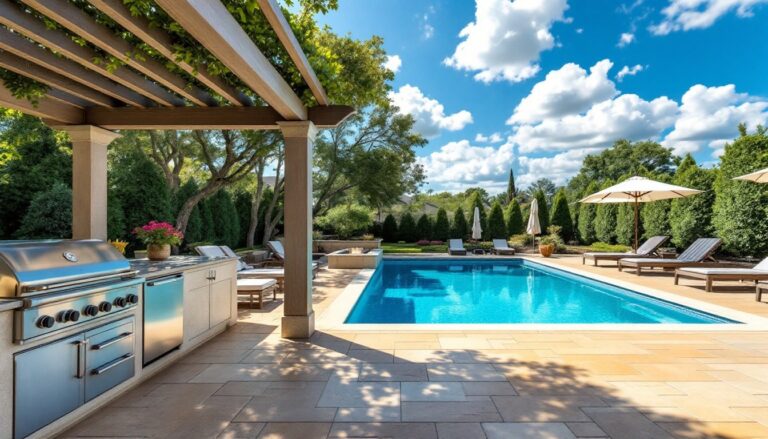
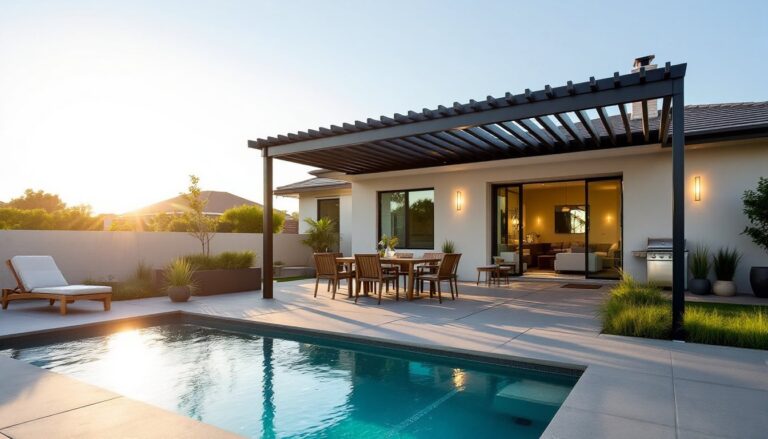
Minimalism has moved beyond interior design into the backyard. A modern pool deck with clean lines uses negative space smartly, a wide, uninterrupted concrete pad with subtle color shifts or a single band of contrasting material. Think smooth, polished finishes in soft grays or warm charcoals rather than decorative stamps. The appeal? It’s calming, easy to maintain, and frames the pool as the focal point. Straight edges, geometric scoring patterns, and flush transitions between the deck and pool shell create that contemporary edge. This approach works especially well if your Home Pool: Transform Your doubles as an entertaining space, guests will appreciate the spacious, uncluttered feel. Keep the palette muted and let the architecture speak for itself.
Textured And Decorative Finishes
If minimalism feels too austere, textured finishes add visual interest without screaming “look at me.” Acid-stained concrete creates subtle, organic color variations that feel natural and warm. Stamped concrete (using molds to imprint patterns like stone, slate, or tile) delivers the texture of expensive materials at a fraction of the cost. Exposed aggregate, where the top layer is polished or washed away to reveal stones embedded in the concrete, offers a modern, industrial vibe. For something more subtle, a light broom finish (dragging a broom across wet concrete) creates slip resistance plus a textured appearance. Decorative borders or accent bands in contrasting colors or finishes frame the pool and add sophistication. The key is restraint: one or two complementary techniques outperform a kitchen-sink approach. Hot Tub Decks and showcase how textured finishes can elevate adjacent outdoor spaces too.
Color And Pattern Options That Work
Concrete doesn’t have to be gray. Modern staining and sealing techniques open up a spectrum of options. Acid stains react with concrete’s minerals to produce warm terracottas, soft blues, warm tans, and even muted greens. They’re subtle, you’re not painting on top, so the finish ages gracefully rather than peeling. Water-based stains offer more consistent color but less depth. For bolder statements, concrete dyes provide true color while still allowing the surface texture to show through. Neutral tones (warm grays, sand, taupe) remain the safest choice: they hide dirt, complement most landscaping, and won’t feel dated in five years. If you want pattern, score lines create grids or geometric divisions that break up large expanses, functional for controlling cracking while looking intentional. Inlays of contrasting materials (like pebble strips or wood lines) add luxury without overwhelming the design. Avoid patterns that mimic other materials unless they’re done with real skill: cheap-looking faux stone dates fast. Consider how color interacts with your poolside furniture, landscaping, and home exterior. A swatch test in full sunlight beats guessing from a sample indoors.
Practical Maintenance And Durability Tips
Concrete pool decks are low-maintenance compared to wood, but they’re not maintenance-free. Sealed concrete resists stains, algae, and UV fading far better than bare concrete. Apply a quality sealer (polyurethane or epoxy-based, depending on your climate) every 2–3 years. This isn’t a weekend job for most DIYers, professional sealing ensures even coverage and proper curing. Cleaning is straightforward: a pressure washer at moderate pressure (2,500 PSI or less to avoid damage) removes algae and dirt. Avoid acid cleaners unless specifically recommended for your sealer type. In freeze-thaw climates, use calcium chloride or sand (never rock salt) if ice forms: salt damages concrete over time. Fill hairline cracks with concrete filler before they widen. Larger cracks or spalling (surface flaking) signal that professional repair may be needed. Location matters, Deck Finishing: Transform Your addresses how proper surface prep and protective measures extend all deck lifespan. A pool deck in full sun will weather faster than one with afternoon shade, so placement of nearby trees or structures affects your maintenance schedule. Budget for resealing or refreshing the top layer every 5–7 years as part of your ongoing backyard maintenance.
Conclusion
Modern concrete pool decks merge durability with design flexibility, making them the practical choice for homeowners serious about their outdoor investment. Whether you choose minimalist lines, textured finishes, or strategic color, concrete adapts to your vision while standing up to years of poolside life. The upfront cost is reasonable, the maintenance is manageable, and the longevity speaks for itself. Start by sketching your ideal look, pull inspiration from Houzz for design ideas, consult with a concrete specialist about your region’s specific needs, and remember that prep work and sealing make all the difference. Your pool deck shouldn’t fade into the background, it should feel like an intentional, polished extension of your home.