Table of Contents
ToggleA well-designed outdoor pool patio turns a simple backyard into an extension of your home, a place where you actually want to spend summer evenings. The right combination of flooring, shade, furniture, and landscaping can make the difference between a functional pool area and one that feels like a resort. Whether you’re starting from scratch or refreshing an existing patio, smart design choices create both visual appeal and practical comfort. This guide walks you through the key decisions: choosing a style that fits your home, selecting durable materials, planning zones for lounging and dining, and adding those finishing touches that pull the whole space together.
Key Takeaways
- Outdoor pool patio ideas thrive on distinct design zones—lounging, dining, and gathering areas—that keep traffic patterns logical and activities separate while creating a resort-like atmosphere.
- Material selection is critical: porcelain pavers, composite decking, and travertine balance durability, safety, and aesthetics, with proper base preparation essential to prevent settling and cracking.
- Shade solutions like pergolas, retractable awnings, and strategic umbrellas are non-negotiable for comfort; layered lighting with warm color temperatures (2700K–3000K) transforms the space into an inviting evening retreat.
- Contemporary minimalist and Mediterranean/tropical design styles each offer distinct benefits—clean aesthetics for smaller spaces versus abundant textures and plantings for relaxation and privacy.
- Strategic landscaping, including privacy screens and accent plantings in containers, frames the pool area and softens hard surfaces without overwhelming the patio with maintenance-heavy trees.
- Finishing touches like outdoor showers, storage solutions, and weather-resistant furniture complete the design and make an outdoor pool patio feel genuinely intentional and welcoming.
Design Styles For Modern Pool Patios
Contemporary Minimalist Designs
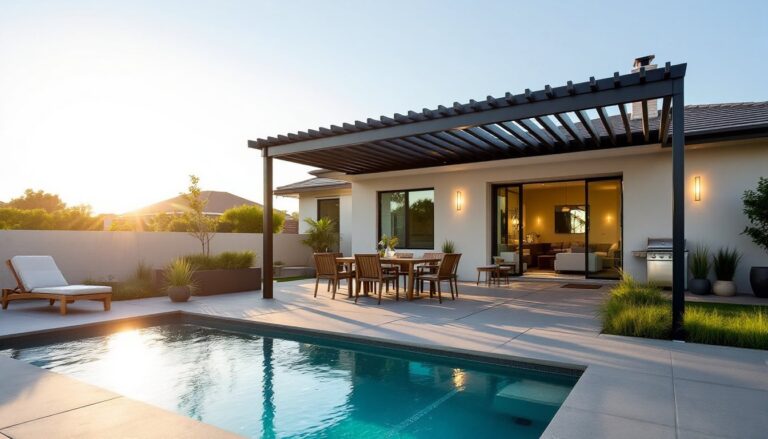
Contemporary pool patios favor clean lines, neutral color palettes, and uncluttered sightlines. Think sleek stone or composite decking in grays and blacks, with built-in concrete or metal seating. This style prioritizes function, every element serves a purpose, and nothing feels decorative for decoration’s sake.
Minimalist patios work well for smaller spaces because they don’t compete visually. Low-profile lounge chairs, a single shade structure, and simple planting beds keep the focus on the water itself. Materials are typically modern: polished concrete, large-format porcelain pavers, or composite decking. The pool becomes the centerpiece, not an afterthought surrounded by clutter.
Color restraint is key. Stick to whites, grays, blacks, and one accent color, perhaps warm wood tones or a deep blue that echoes the pool water. This approach ages well and feels expensive without requiring high maintenance.
Mediterranean And Tropical Inspirations
Mediterranean designs bring warmth, texture, and a sense of escape. Terra cotta tiles, natural stone, and curved edges soften the pool area. Think clay planters, abundant greenery, arched pergolas, and warm earth tones. These patios feel generous and inviting, even if the actual square footage is modest.
Tropical designs layer lush plantings, natural wood, and water features beyond just the pool. Palms, banana plants, and ornamental grasses create privacy and movement. A tropical patio often includes a tiki bar, woven seating, or a cabana-style shade structure. These styles work best with adequate space, as density is part of their charm.
Both styles embrace comfort over minimalism. Cushioned seating, multiple shade zones, and ambient lighting matter more than stark simplicity. The goal is relaxation and a sense of vacation, even if you never leave your property. Consider your climate and maintenance tolerance, Mediterranean works in warm, dry zones, while tropical thrives in humid areas with consistent moisture.
Flooring And Surface Material Selection
Your pool patio flooring must handle constant wet feet, UV exposure, and temperature swings without becoming slippery or cracking. Material choice affects both safety and longevity.
Porcelain pavers are the modern workhorse for pool decks. They’re non-porous, slip-resistant when properly sealed, and come in countless colors and finishes. Large-format pavers (24″ × 24″ or larger) minimize grout lines, which reduces maintenance and algae buildup. Expect to pay $8–$15 per square foot installed, depending on size and finish.
Natural stone, slate, travertine, or limestone, offers warmth and character. Travertine is popular around pools because its porous surface stays cooler underfoot than dark materials. But, some natural stone is porous and requires regular sealing to prevent staining and mold growth. Budget $10–$20+ per square foot.
Composite decking or recycled plastic lumber mimics wood but resists rot, splintering, and UV fading. It won’t move and split like pressure-treated lumber. Composite costs $12–$25 per square foot but lasts 20+ years with minimal upkeep. It works well in contemporary designs and feels less institutional than concrete.
Concrete is budget-friendly ($4–$8 per square foot) and durable, but plain gray can feel bland. Stamped, stained, or polished concrete adds visual interest. But, concrete can crack in freeze-thaw cycles and becomes dangerously slippery when wet, apply a non-slip sealant. A concrete contractor can add aggregate or texture to improve grip.
Installation note: Whether you’re laying pavers or pouring concrete, base preparation is non-negotiable. A compacted gravel base (4–6 inches), proper slope for drainage (1/8 inch per foot away from the pool), and good soil compaction prevent settling and cracking later. This is work worth hiring a professional for.
Creating Comfortable Lounging And Dining Areas
A resort-worthy patio needs distinct zones: one for lounging and sunbathing, another for dining, and ideally a third for play or conversation. This separation keeps traffic patterns sensible and lets different activities coexist.
Lounging zones require space for lounge chairs with room to walk around them. Allow at least 10 feet × 12 feet for two chairs and small side tables. Lounge chairs should recline fully and have a weather-resistant fabric or cushions rated for pool areas (solution-dyed acrylic resists fading and moisture). Position loungers facing the sun or with access to shade, more on that next.
Dining areas need a sturdy table and weather-resistant chairs. A 42-inch round table seats 4 comfortably: a 36-inch × 72-inch rectangular table seats 6. Leave at least 3 feet of clearance on all sides for chair movement. Pool-side dining tables are best in teak, powder-coated metal, or composite materials that won’t rot or rust. Standard dining seat height is 18 inches: pair it with a 30-inch table.
Seating arrangements should follow the contours of your patio and pool shape. A curved seating wall or built-in bench along one edge provides low-maintenance seating and encourages gathering. Incorporate a home swimming pool design that complements these social zones, the patio and pool should feel integrated, not separate.
Cushions and fabrics: Outdoor cushions should be stored when not in use or kept in waterproof deck boxes. Solution-dyed acrylic, polypropylene, and performance fabrics resist mildew and fade. Check that seating is rated for pool-side use: salt chlorine, and UV are harsh on ordinary fabrics.
Consider traffic flow. The path from the house to the pool should feel natural. Don’t block it with furniture or forced focal points. A clear, comfortable route encourages use.
Shade Solutions And Lighting Features
Hours of direct sun make a patio uncomfortable, no matter how nice the furniture. Shade is essential, and it’s one of the easiest upgrades to plan and install.
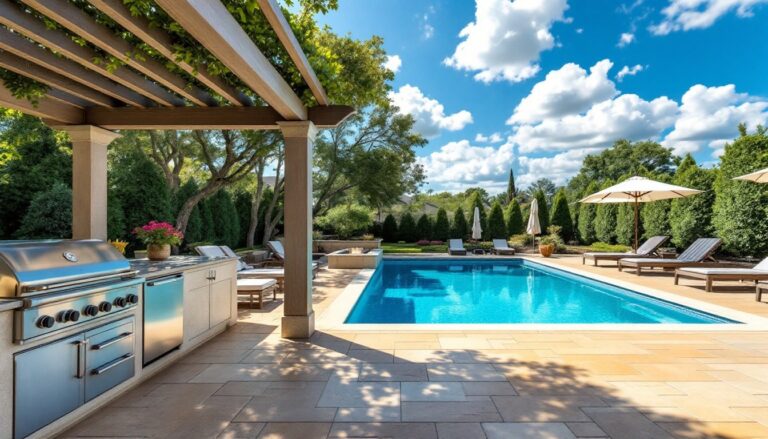
Pergolas are the classic choice: open-roof structures that provide dappled shade and a visual anchor. A 12-foot × 12-foot pergola over a dining area costs $2,000–$5,000 installed. Wood pergolas need annual staining: aluminum or vinyl versions are maintenance-free. Drape shade cloth or retractable shade panels over the top for extra coverage on hot days.
Retractable awnings offer flexible shade you can open or close. A motorized retractable awning over a dining or lounging area costs $1,500–$3,500. Sunbrella fabric is the standard, solution-dyed, fade-resistant, and water-repellent. Position the awning to block afternoon sun (west side) rather than morning sun.
Umbrellas are the most affordable shade option: $100–$500 for a quality 9-foot cantilever umbrella. Base-weighted umbrellas won’t tip in breeze. Multiple umbrellas placed strategically offer flexibility, move them as the sun shifts. Sun shades for patios are another smart solution, and resources like Houzz showcase countless shade ideas.
Lighting transforms a patio into an evening retreat. Layer three types:
- Ambient lighting: Low-level landscape lights or recessed deck lights at 2–3 feet intervals. Aim for 5–10 foot-candles (dim, welcoming) rather than stadium bright.
- Task lighting: Brighter lights over dining or game areas (15–20 foot-candles). Overhead pendant lights on a pergola or mounted to the house work well.
- Accent lighting: Uplighting on trees, in-pool lights, or LED strip lighting under railings create mood and depth.
Use warm color temperature (2700K–3000K) rather than cool white (5000K+), which feels sterile and attracts insects. LED fixtures are energy-efficient and run cool. Install a dimmer switch so you can adjust brightness for different activities and times of evening.
Landscaping And Finishing Touches
Strategic plantings frame the pool area, provide privacy, and soften hard surfaces. Avoid trees with messy leaves or seed pods directly over or next to the pool, they’ll clog the skimmer and require constant cleaning. Instead, position trees at the perimeter to create a backdrop.
Privacy plantings are worth the investment. Tall shrubs or small trees (bamboo, ornamental grasses, evergreen screens) shield the pool from neighbors and street views. A living screen feels warmer than a fence and supports the resort aesthetic. Leave at least 3 feet between plantings and the patio edge for air circulation and maintenance access.
Accent plants in containers around the patio add color and define zones. Use seasonal annuals for pops of color, and pair them with structural plants like ornamental grasses or dwarf shrubs for year-round interest. Cluster pots in odd numbers (3, 5, or 7) rather than scattering singles.
Hardscape details complete the picture. A fire pit or water feature adds sensory richness and gives guests a reason to linger. A small fountain or recirculating water feature provides ambient sound and movement. Patio awnings or decorative structures add architectural interest without overwhelming the space.
Storage and utilities shouldn’t be ignored. Hide pool equipment, pumps, and filters behind screening or landscaping. Include a discrete outdoor shower to rinse chlorine off before entering the house, a simple floor-mounted or wall-mounted fixture prevents tracking chemicals indoors and protects flooring. Design inspiration from Southern Living and landscape resources like Gardenista offer countless plant and arrangement ideas.
Finishing touches are details: a weather-resistant side table between lounge chairs, a towel rack mounted to the pergola, a small outdoor refrigerator or beverage cooler, decorative throw pillows (in pool-rated fabrics), and rope or string lights overhead. These touches feel intentional and make the space feel genuinely inviting, like a place you designed for yourself, not a blank rectangle around a pool.