Table of Contents
ToggleA backyard pool and outdoor kitchen combination has become one of the most sought-after home upgrades for homeowners looking to maximize entertainment space and property value. Whether you’re working with a sprawling suburban lot or a compact city garden, thoughtful design and strategic planning can turn any outdoor area into a functional, inviting retreat. The key is balancing aesthetics with practicality, choosing layouts that fit your space, materials that withstand your climate, and features that align with how you actually entertain. This guide walks you through proven pool and kitchen ideas tailored for 2026, complete with honest talk about what works, what takes effort, and where to invest your budget wisely.
Key Takeaways
- Modern backyard pool and outdoor kitchen designs prioritize clean lines, efficient layouts, and integrated zones that maximize both entertainment value and property appeal.
- Compact pool layouts like plunge pools (6 by 12 feet) and narrow lap pools work brilliantly for smaller yards without sacrificing style or functionality.
- A functional outdoor kitchen should match your actual cooking habits and budget, starting with a quality stainless-steel grill paired with durable countertops and adequate clearance for safe operation.
- Unify your pool and kitchen areas through consistent materials, intentional sightlines, and warm color palettes that create one cohesive outdoor retreat rather than disconnected spaces.
- Proper electrical planning, drainage systems, and compliance with local codes are non-negotiable investments that prevent costly repairs and safety hazards down the road.
Modern Poolside Designs That Maximize Space And Style
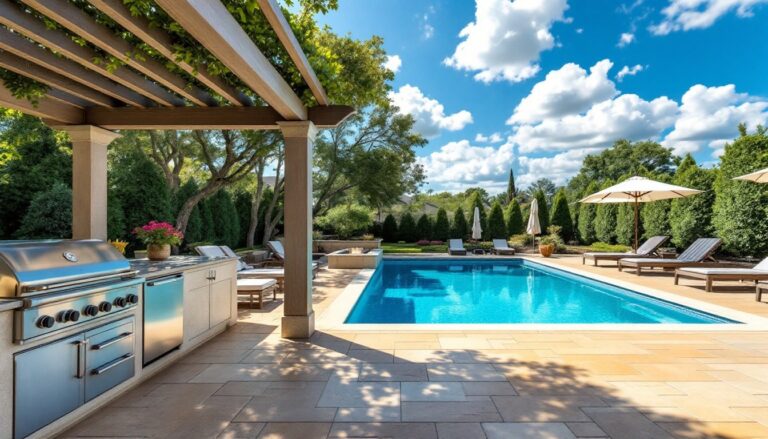
Today’s pool designs prioritize clean lines, efficient layouts, and multi-functional zones. Modern pools don’t need to be massive to make an impact, smart engineering means smaller footprints can deliver the same visual punch and usability. Think zero-edge (or infinity) designs that blur the boundary between pool and patio, or rectangular lap pools that fit snugly along property lines. Material choices also matter: stamped concrete, travertine pavers, and porcelain tiles are durable, slip-resistant when wet, and complement contemporary homes. Most modern designs also integrate integrated seating ledges, tanning shelves, and shallow lounging areas within the pool itself, cutting down on deck space needed while increasing functionality.
The best modern pools are also designed with drainage and maintenance access in mind. Ensure your pool deck slopes gently away (at least ¼ inch per foot) to prevent water pooling and algae growth. If you’re hiring a contractor, confirm they account for subsurface drainage systems, this saves headaches and prolongs pool life.
Compact Pool Layouts For Smaller Yards
Not every backyard has room for a resort-style lagoon, and that’s fine. Compact pools are incredibly popular for urban lots and suburban homes where space is tight. A plunge pool (typically 6 by 12 feet or smaller) works for cooling off, exercise, and visual appeal without consuming your entire yard. Alternatively, a lap pool design, long and narrow, often 15 to 20 feet, maximizes functionality for swimmers while leaving room for adjacent kitchen and seating areas.
For genuinely tight spaces, consider an above-ground or semi-recessed pool with modern styling. These can be just as attractive as built-in pools when properly finished with premium liners and integrated decking. A raised pool (2 to 3 feet above grade) actually saves on excavation costs and doubles as a seating ledge around its perimeter. Vertical space is your friend here, taller landscaping and wall-mounted features keep the footprint small while making the area feel complete.
Compact layouts thrive when you resist the urge to cram every amenity poolside. Place a small fire pit or lounge zone just beyond the pool deck, separated by a low hedge or planter. This gives visual separation without expensive walls and lets guests flow naturally between the pool, kitchen, and social zones. Just ensure pathways remain at least 3 to 4 feet wide for safe foot traffic, and check local building codes, setback requirements from property lines vary by jurisdiction, and some areas require fencing or gates around pools regardless of size.
Functional Outdoor Kitchen Essentials For Every Budget
An outdoor kitchen doesn’t mean you need a full second house in the yard. Start by identifying what you actually cook and eat. If you’re a grilling enthusiast, a built-in grill and minimal counter space might suffice. If you’re hosting large groups, a prep sink, refrigeration, and storage become non-negotiable. Budget plays a role, too: a basic stainless-steel grill and a concrete countertop might run $3,000 to $5,000, while a fully equipped modular setup can exceed $15,000. Neither is “wrong”, it’s about matching the investment to your lifestyle and entertaining frequency.
Stainless steel is the standard for outdoor cooking equipment because it resists rust and UV degradation better than alternatives. A 36-inch built-in grill is versatile for families and small gatherings: larger groups benefit from 48-inch models or dual burners. Pair it with a side burner for sauces and sides, and consider a rotisserie or smoker attachment if low-and-slow cooking appeals to you. Counter materials matter too: granite, porous stone, or engineered quartz with a non-slip finish hold up to weather and food prep. Concrete works but requires annual sealing in most climates.
Built-In Grills And Cooking Stations
The difference between a freestanding grill and a built-in setup is modularity and integration. Built-in grills sit flush within cabinetry, creating a cleaner look and anchoring the kitchen’s design. They also typically sit at 36 inches high, standard counter height, which is comfortable for cooking and serving.
When planning a built-in station, account for adequate clearance around the grill: at least 36 inches in front for safe operation and food prep, and 24 to 30 inches of counter space on each side for staging ingredients and plating. If your grill faces a wall, ensure there’s 48 inches of vertical clearance above the cooking surface to allow heat and smoke to escape. Many local fire codes mandate this, and skipping it creates a fire hazard and makes cooking miserable.
Storage and access are often overlooked but critical. Outdoor kitchen cabinets require marine-grade stainless steel or powder-coated aluminum frames to resist rust and salt spray (especially near coasts). Standard kitchen cabinets will rot and fail outdoors. A small refrigerator drawer ($400–$800) keeps drinks cold and reduces trips inside. A mini fridge (24 inches wide) is also budget-friendly and easier to install than larger models. Drawers for utensils, grilling tools, and linens should be vented and use stainless hardware. If you’re pouring concrete or pavers for countertops, hire a professional, poor slope or finish can trap water and damage underlying structures. A design guide from Gardenista offers practical insights on weatherproofing and material selection.
Creating A Cohesive Design Between Pool And Kitchen Areas
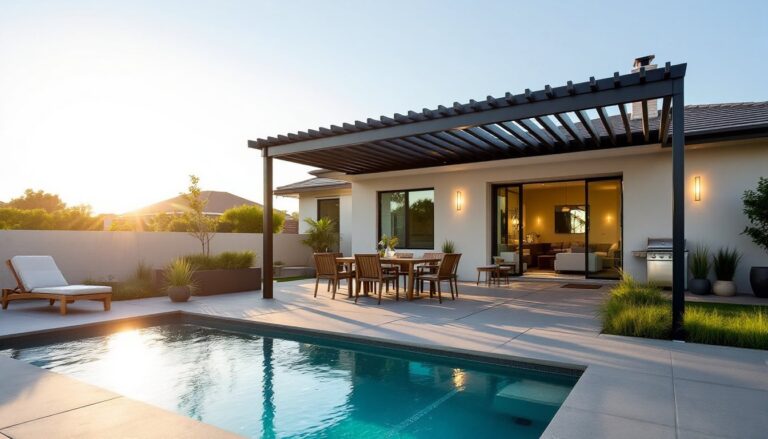
The magic happens when the pool and kitchen feel like one integrated space rather than two separate projects. Start with a unifying material palette: if your pool deck is travertine pavers, echo that in the kitchen countertop edge or a decorative border. If the kitchen cabinets are teak or composite (outdoor-rated wood), repeat that warmth in pergola posts or privacy screens near the pool. This doesn’t mean everything matches, it means intentional repetition that ties zones together visually.
Sightlines matter, too. Position the grill and prep areas so the cook faces the pool and social zones, not a blank wall or hedge. Guests naturally gather around the grill, and you’ll want conversation and supervising kids to feel connected, not isolated. Conversely, lounging areas near the pool shouldn’t stare directly at the kitchen exhaust or smell charcoal smoke all evening, a 10 to 15-foot buffer and a light screen or planting helps. Consider flow: can someone move easily from the house to the kitchen to the pool without navigating through a maze or dead ends? Wide, continuous pathways (at least 3 to 4 feet) and thoughtful placement of stairs or transitions keep the space feeling open.
Color and finish choices anchor cohesion too. Warm tones (tans, terracottas, warm grays) evoke resort living: cool tones (blues, charcoal, cool grays) feel modern and calm. Pick one or two accent colors and weave them through cushions, umbrellas, and landscaping. A unified color story makes the entire area feel intentional and designed, not cobbled together. Also think about the transition points, the deck between kitchen and pool, or steps up to a raised patio. These are opportunities to signal a shift in zones without losing visual continuity. A change in paver pattern, a subtle step up, or a change in lighting can delineate spaces elegantly.
Lighting, Landscaping, And Entertainment Features That Tie It All Together
Lighting transforms a backyard from a daytime haven into an after-dark retreat. String lights overhead create warmth and define the entertaining zone without harsh spotlights. LED options are efficient and come in warm white (3000K color temperature) or cool white: warm white is usually more flattering and inviting. Recessed deck lights or pathway lights (low-voltage, 12V LED) provide safety and ambiance without dominating the visual landscape. For the grill and prep areas, a combination of overhead pendant lights and under-cabinet task lighting ensures you can cook safely at dusk and evening. Avoid over-lighting, too many fixtures create a parking lot effect. Test your lighting plan at dusk and twilight: what looks good at noon may feel harsh at 8 p.m.
Landscaping serves both practical and aesthetic purposes. Privacy plantings, tall shrubs or small trees, buffer wind and noise while framing the space. Native plants require less water and maintenance in most regions, and they support local ecosystems. Along property lines, a 3 to 4-foot hedge or fence provides screening without blocking views within your space. Around the pool deck, avoid dropping-leaf plants (poplars, pines, cottonwoods) that shed constantly into the water: stick with evergreens, ornamental grasses, or deciduous trees set back from the deck edge. Consider pool maintenance routines when choosing landscaping, fewer plants poolside means less debris cleanup.
For entertainment, think beyond a grill. A fire pit or fireplace (gas or wood, depending on local regulations) extends the season and creates gathering space. A pergola or shade structure keeps guests comfortable in hot climates and frames the kitchen/pool connection visually. Built-in seating benches under pergolas save space and encourage lingering conversations. A small water feature like a fountain or spillover into the pool adds ambiance and the soothing sound of moving water. If music matters, outdoor-rated Bluetooth speakers (mounted under eaves or inside water-resistant enclosures) keep things lively. Better Homes & Gardens offers seasonal entertaining ideas that pair food, ambiance, and guest flow beautifully.
One practical tip: plan electrical runs before pouring concrete or pavers. Outdoor kitchen appliances need dedicated 240V circuits for larger grills (typically a 40-50 amp breaker) and separate 120V circuits for smaller appliances, lights, and entertainment gear. Hire a licensed electrician to run these lines in conduit below grade, and install GFCI outlets (ground-fault circuit interrupter) on all circuits within 6 feet of the pool or water source, this is an NEC (National Electrical Code) requirement. Don’t skimp here: poor electrical work is a fire and shock hazard. Also confirm your designs comply with local setback and safety codes before you break ground: a permit may be required for the pool, kitchen, or both depending on your area.
Conclusion
A well-designed backyard with a pool and outdoor kitchen can transform how you live and entertain at home. The best projects start with honest assessments of your budget, space, and actual use patterns. Whether you’re building from scratch or refreshing an existing area, invest in durable materials, proper planning, and professional help where it matters (electrical, plumbing, structural work). The result isn’t just a beautiful outdoor space, it’s a functional gathering place that adds joy and value to your home for years to come. Start with the essentials, prioritize flow and cohesion, and let your design evolve as your needs do.