Table of Contents
ToggleA composite pool deck changes everything about summer living. Instead of splinter risks, fading wood, or constant staining on natural materials, TRex composite decking handles pool chemicals, chlorine splash, and moisture without deteriorating. Homeowners who’ve made the switch report fewer annual maintenance headaches and decks that still look fresh after a decade of use. If you’re planning a pool renovation or building from scratch, the deck surface matters as much as the water chemistry, it’s where families actually spend their time. This guide walks through seven practical TRex deck approaches that balance aesthetics, durability, and real-world functionality for pool environments.
Key Takeaways
- TRex composite pool deck materials resist chlorine, moisture, and UV damage without warping, rotting, or splintering, making them ideal for poolside environments where wood decking fails.
- Neutral gray and taupe TRex composite finishes hide water spots and chlorine residue while pairing with any architectural style and home decor, offering timeless design appeal.
- While composite decking costs $6–12 per linear foot versus $2–4 for treated lumber, the total cost of ownership favors composite over 15 years due to minimal maintenance and no resealing cycles.
- Proper deck layout with a 4–6 foot transition zone near the pool edge, a slight 1/8-inch slope per foot for drainage, and straightforward patterns reduces standing water and simplifies seasonal cleaning.
- Matching deck height to interior flooring and coordinating composite deck colors with indoor finishes creates seamless visual transitions that blur indoor-outdoor boundaries in modern pool designs.
- Built-in composite elements like railings, benches, and trim ensure uniform aging across the entire pool deck and eliminate the need to replace corroding or splintering metal or wood furnishings separately.
Why TRex Is The Smart Choice For Pool Decks
TRex composite decking is engineered specifically to resist the unique stresses of poolside environments. Unlike pressure-treated lumber, composite boards won’t swell, warp, or rot when exposed to constant moisture and chemical spray. The material is made from wood fibers and plastic, bonded to create a surface that mimics wood grain without wood’s vulnerability.
Pool decks face more abuse than standard patios. Wet feet, chlorine residue, UV exposure, and temperature swings demand a decking surface that won’t cup, splinter, or fade noticeably. TRex boards handle all of this while staying slip-resistant when wet, a critical safety feature around water.
Cost-wise, composite runs $6–12 per linear foot for quality boards, compared to $2–4 for treated lumber. But the maintenance math favors composite. You’re not resealing every two years, power-washing stains, or replacing rotted boards at the five-year mark. Over 15 years, total cost of ownership often tips toward composite, especially in humid climates or regions with hard winters. According to resources like HomeAdvisor, homeowners can use cost estimators to compare decking options and budget accordingly.
TRex specifically offers boards in various thicknesses and finishes, plus a lifetime structural warranty on most residential lines. They don’t sponsor this guide, the point is that pool decks need materials proven in moisture-heavy conditions, and composite delivers that reliability.
Classic Composite Decking With Modern Appeal
Neutral composite boards in grays, taupes, and weathered charcoal remain the best-selling choice for pool decks. These tones hide water spots, evaporated chlorine residue, and minor dirt accumulation better than lighter shades. They also pair with nearly every architectural style, from modern minimalist homes to traditional designs.
Neutral Tones For Timeless Design
A deck built with TRex Select boards in Island Mist or similar ash-gray finishes creates a sophisticated backdrop that lets landscaping and pool features stand out. Homeowners often add darker composite railings and fascia boards to define the deck edge, this visual contrast improves safety by making the deck perimeter clear from a distance.
When you’re planning layout, neutral tones allow you to experiment with furniture and accessories without worrying about clashing. A gray composite base works with any lounge chair color, accent lighting, or planter arrangement. Many pool owners who choose neutral decks then invest in quality deck lighting to create ambiance after sunset, the neutral surface acts as a clean canvas for those design additions.
Neutral decks also photograph better for resale. Real estate agents and home appraisers recognize composite decks as an upgrade, and a clean, classic gray surface signals “well-maintained investment” more effectively than trend colors. If you’re thinking 10+ years ahead, neutral is the safer long-term play. Prep work matters here too: ensure the base is level and compacted, use composite-compatible fasteners (stainless steel or coated), and leave proper expansion gaps between boards as the manufacturer specifies.
Bold Color Options To Define Your Pool Space
Some homeowners intentionally choose richer deck colors to create visual separation between the pool area and the rest of the yard. TRex offers boards in warm browns, deep charcoals, and even warm-toned composites that mimic ipe or cumaru hardwoods. These bolder choices make a statement and can anchor a cohesive outdoor living zone.
Warm Tones For Mediterranean Vibes
A deck in warm brown or honey-toned composite evokes resort poolside aesthetics and works beautifully in sun-soaked regions. TRex Enhance in Saddle or similar warm finishes pair well with natural stone pavers, cedar shade structures, or tan-colored planters. The warmth also makes the space feel inviting during twilight hours, golden composite tones photograph beautifully in late-afternoon light.
Warm-toned decks do show dust and pollen more visibly than grays, so plan for occasional light sweeping. They’re equally fade-resistant thanks to composite technology, but the visual nature of lighter tones means minor dust is more apparent. This isn’t a maintenance burden: it’s just a trade-off for aesthetic preference. When planning home pool designs, consider how a warm deck complements your landscaping and home exterior. Warm composite pairs naturally with stucco homes, Mediterranean-style architecture, and landscaping featuring desert plants, palms, or gravel-based xeriscaping.
For durability, warm composite decks are identical to neutral ones, no compromise in performance. The choice is purely aesthetic and site-specific.
Low-Maintenance Deck Layouts That Enhance Functionality
Smart deck layout separates high-traffic zones from quiet lounging areas and incorporates practical features that reduce ongoing maintenance. A well-planned composite pool deck minimizes standing water, simplifies cleaning, and maximizes usable space.
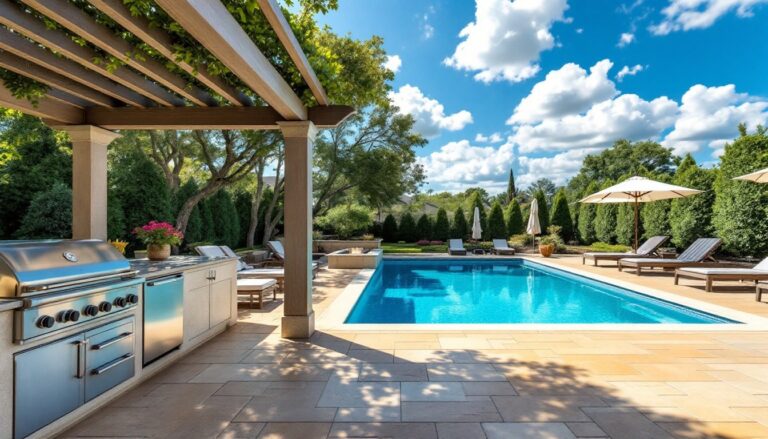
Consider creating a transition zone just beyond the pool edge, an 4–6 foot wide band where wet feet naturally dry before stepping onto main lounging areas. This zone takes the brunt of water spray and foot traffic without compromising comfort on the wider deck. Some homeowners use contrasting board colors or slight elevation changes to define this zone visually.
Deck slopes matter too. Composite boards should pitch slightly (about 1/8 inch per foot) away from the pool to prevent water pooling and algae growth. Poor drainage turns an otherwise low-maintenance deck into a slippery, stained surface. Verify slope during installation, this is easier than correcting it later.
Layout also affects furniture movement and cleaning. A deck with straight lines and open sightlines is simpler to sweep and hose down than one with narrow passages or complex patterns. Curvy, intricate designs photograph nicely but can trap debris. For a pool deck that stays cleaner with minimal effort, keep patterns straightforward and leave clear pathways. Many pool owners who’ve invested in home swimming pool installations find that removing deck clutter and keeping traffic patterns simple reduces seasonal deep-cleaning chores by half.
Built-in benches, planters, or seating ledges should use composite trim to match the deck, this keeps the overall look cohesive and ensures all surfaces age uniformly. Avoid bolting on wood or metal furnishings that will corrode or splinter separately from the deck.
Creating Seamless Transitions Between Indoor And Outdoor Living
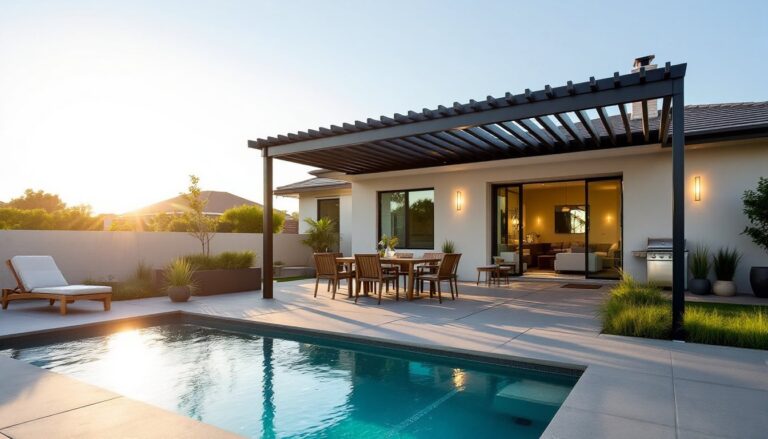
Modern homes increasingly blur the line between inside and outside, and the deck is the pivot point. A well-designed composite pool deck connects patio doors, sliding glass walls, and interior flooring seamlessly so the transition feels natural rather than abrupt.
Start by matching deck height to interior floor level when possible. A pool deck that’s 6–8 inches below interior flooring is standard, but some newer homes are designed so the deck sits nearly flush with the house interior. This requires engineering the pool deck to account for proper drainage and frost protection, so consult a professional if you’re planning a near-level transition. The visual flow, though, is worth the planning effort.
Color coordination also matters. If your interior features gray or neutral tile, a gray composite deck creates a continuous visual line from inside to outside. Conversely, warm wood tones inside pair beautifully with warm composite deck tones. The goal isn’t exact matching, it’s visual harmony. A hardscape contractor or landscape designer can show you samples of composite and interior flooring together to test combinations.
When integrating covers for decks and patios, consider how a shade structure (pergola, retractable awning, or fixed roof) will frame the transition. A shaded deck extension feels like an outdoor room rather than just a platform, and it significantly extends the usable season by providing relief from intense sun.
Cleating and railings also influence transitions. Composite railings in a tone that echoes interior accents, say, a dark charcoal railing if your interior has dark wood trim, create visual continuity. Building codes require railings on decks over 30 inches, so plan for them rather than viewing them as an afterthought. A well-designed railing becomes part of the aesthetic, not a safety add-on that disrupts the view.