Table of Contents
ToggleAdding an inground pool to your backyard is one of the most rewarding home investments you can make, but the options feel overwhelming. Do you go minimal and modern, or dream bigger with resort-style features? Can you actually fit a quality pool on a smaller lot? The good news: 2026 has brought smarter designs, more flexible budgets, and practical solutions for nearly every homeowner. Whether you’re working with a postage-stamp yard or sprawling acreage, this guide walks you through real backyard inground pool ideas that balance aesthetics, functionality, and honest cost talk.
Key Takeaways
- Backyard inground pool ideas range from compact lap pools under 400 square feet for small lots to resort-style lagoon designs for larger yards, making quality pools achievable for nearly every homeowner.
- Vinyl-lined pools cost 30–40% less than concrete alternatives, and you can add premium features like hot tubs or advanced lighting systems later by planning plumbing runs upfront.
- LED underwater and deck lighting transforms your pool into an evening showstopper for $800–$2,000, while solar covers reduce heating costs and pay for themselves in one season.
- Thoughtful landscaping with deciduous trees for winter sun exposure, proper deck sloping for drainage, and equipment screening complete your pool area while boosting property appeal.
- Consistent weekly chemical testing, monthly filter maintenance, and annual budgets of $1,200–$2,000 prevent costly repairs and protect your swimming pool investment’s resale value.
Contemporary Pool Designs That Maximize Your Backyard Space
Modern pool design isn’t about cramming the biggest hole you can dig. It’s about intelligent layouts that complement your yard’s shape and size while creating a functional living space.
Compact Modern Pools for Smaller Lots
If you’ve got under 2,000 square feet of usable yard, a traditional 15×30 foot pool isn’t realistic. Instead, consider a lap pool (12–15 feet wide, 30–40 feet long) or a smaller “plunge” pool (8–12 feet deep, 10–15 feet wide) that prioritizes depth over sprawl. These work beautifully on narrow city lots and townhome properties.
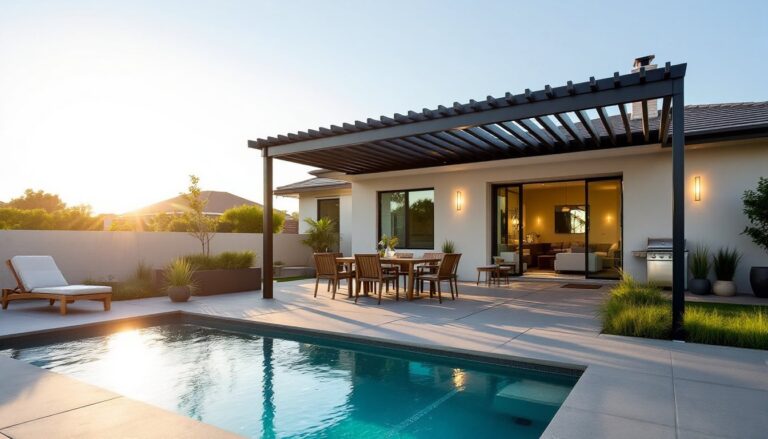
Compact pools also reduce excavation costs, chemical demand, and overall maintenance, all real wins. A 300–400 square foot pool still gives you a genuine swimming experience without eating your entire backyard. Pair it with thoughtful hardscaping and you’ve created an intimate resort feel, not a cramped afterthought.
Lagoon and Resort-Style Pools
Larger yards allow for more creative freedom. Lagoon-style pools mimic natural water features with curved edges, zero-entry (beach-entry) sections, and integrated spas or shallow lounging areas. These designs feel organic and luxurious without screaming “expensive construction.”
The key difference from a simple rectangular pool is thoughtful contouring. A sloped entry from 0 inches to 5 feet mimics a natural beach. Rock features or water features (fountains, disappearing edges) amp up the ambiance. If you’re building one of these, expect a longer design process and site assessment, zero-entry slopes need proper drainage and grading to prevent standing water. Local building codes (typically under IRC Chapter 3: General Building Planning) often govern pool depth, deck slopes, and safety rails, so pull your local requirements early.
Budget-Friendly Pool Features You Can Add Now
You don’t need to expensive to build a functional, attractive pool. Start with the shell and core systems, then layer in features over time.
Vinyl-lined pools cost 30–40% less than concrete (gunite) pools but require liner replacement every 7–10 years. Fiberglass pools split the difference: higher upfront cost, lower long-term maintenance, and they’re ready-to-install in weeks rather than months. For strict budget constraints, vinyl is the practical choice.
Skip the fancy tile work initially, standard pool-grade paint or plaster is durable and costs a fraction of mosaic or natural stone finishes. You can upgrade later. Similarly, a basic sand filter system handles most residential needs: save the saltwater chlorine generators and UV systems for year two or three when you’ve recouped initial costs.
Incorporate a hot tub or spa integration into the initial design (plumbing runs parallel) even if you don’t install the tub until later. Running lines after the deck is poured costs double. A home swimming pool investment makes sense when you plan upgrades ahead rather than retrofitting.
Smart Lighting and Heating Solutions
Lighting transforms a pool from daytime amenity to evening showstopper. LED underwater lights have dropped in price and are now standard. They’re energy-efficient, last 10+ years, and come in color-changing options if you want that resort vibe. Fiber optic lights are fancier but harder to maintain: stick with LEDs for reliability.
Deck lighting matters equally. Recessed low-voltage LED deck lights (12V systems are safest) prevent tripping and highlight landscaping. Budget $800–$2,000 for a complete lighting package depending on pool size and complexity.
For heating, a gas heater is fast and works in any climate but costs more to operate. Heat pumps are 3–5 times more efficient but heat slower (ideal for mild climates or spring/fall use). Solar covers are the cheapest passive option, they reduce evaporation and boost water temperature by 5–10°F, paying for themselves in one season. Don’t skip a cover: it’s not just a tarp, it’s a thermal blanket and maintenance game-changer. Pool maintenance costs per year drop significantly when you use proper covers and heating strategies.
Landscaping and Hardscaping to Complete Your Pool Area
A pool surrounded by bare dirt isn’t a backyard, it’s an incomplete project. Hardscaping (deck, pavers, walls) and landscaping (plants, trees) define the space and boost property appeal.
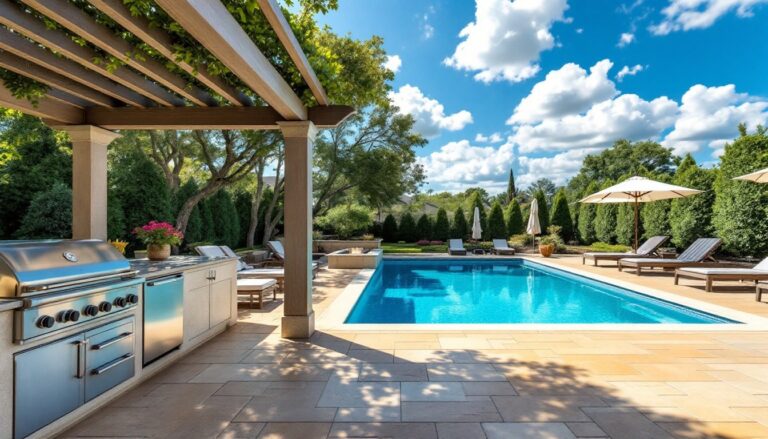
Concrete decking is economical and durable. Stamped or brushed finishes add texture without excessive cost. Travertine or natural stone pavers are premium options: they stay cooler underfoot (crucial in hot climates) but cost 2–3 times more. Whatever you choose, slope the deck 1–2% away from the pool for drainage, standing water breeds algae and becomes a slip hazard.
Planting strategy: frame the pool without shading it. Deciduous trees (maples, birches) lose leaves in winter, letting sun warm the water. Evergreens work as privacy screens on the perimeter. Avoid trees with heavy seed drop or invasive roots near underground plumbing. Resources like Gardenista offer detailed landscape design inspiration if you’re planning integrated gardens.
Small details matter: equipment screening (fence or planted buffer around the pump/heater), utility access (make sure you can service equipment without tearing apart landscaping), and safety considerations (railings where required by code, clear sight lines to the water). Per IRC requirements, pools typically need 4-foot fencing on all sides with self-closing, self-latching gates.
Maintenance Tips to Keep Your Pool Investment Protected
A pool is only as good as the care it gets. Poor maintenance tanks both water quality and your investment’s resale value.
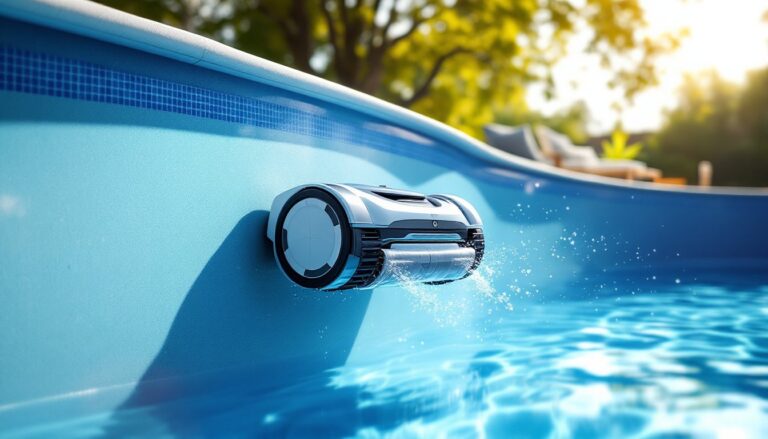
Weekly tasks: Test pH (7.2–7.6 range), chlorine (1–3 ppm), and alkalinity (80–120 ppm). Skim debris, brush walls, and vacuum the floor. A robotic pool cleaner handles vacuuming automatically and cuts hands-on time significantly. Monthly: Deep clean the filter, inspect for leaks, and check equipment. Seasonally: Acid wash (for plaster pools), tile cleaning, and equipment inspection prevent costly repairs.
Use a pool management app or simple log to track chemical levels, skipping this is where most DIY pools fail. Cloudy water, algae blooms, and equipment corrosion all stem from inconsistent monitoring.
Swimming pool maintenance doesn’t have to be complex, but it’s non-negotiable. Budget $1,200–$2,000 annually for chemicals, filter media, and professional servicing if you want reliable year-round operation. If you’re in a specific region, resources like pool maintenance guides tailored to your climate can save headaches. The difference between an “investment” and a “money pit” is consistent, informed upkeep.