Table of Contents
ToggleA swimming pool transforms your backyard, but the real magic happens on the patio surrounding it. The deck or patio you choose sets the tone for everything, how you move between pool and house, where guests gather, how the space flows year-round. Whether you’re working with a tight urban lot or sprawling suburban acreage, smart patio design maximizes function and comfort. This guide walks through seven proven swimming pool patio ideas that work in 2026, from minimalist modern designs to tropical escapes and practical multi-use layouts. We’ll cover materials, layout strategies, and the finishing touches, lighting, shade, privacy, that transform a basic pool area into a destination. Ready to design a patio that works as hard as you do?
Key Takeaways
- Swimming pool patio ideas range from minimalist modern designs to tropical escapes, with smart material and layout choices that maximize function and comfort in any yard size.
- Modern minimalist pool patios use clean lines, large-format pavers (24″×24″ or larger), and a three-color palette to make the pool itself the focal point while creating visual clarity.
- Tropical pool patio designs embrace warm-toned pavers, lush plantings like palms and hibiscus, and water features to evoke a resort atmosphere year-round.
- Multi-functional outdoor living spaces require intentional zoning with clear pathways, distinct areas for dining, grilling, and lounging, and overhead shade solutions like pergolas or shade sails.
- Sustainable patio materials—including permeable pavers, recycled alternatives, and native plantings—reduce environmental impact while lowering maintenance costs and water usage.
- Layered lighting (ambient, task, and accent), shade structures, and privacy solutions like living screens or fencing complete a pool patio that functions beautifully day and night across all seasons.
Modern Minimalist Pool Patios
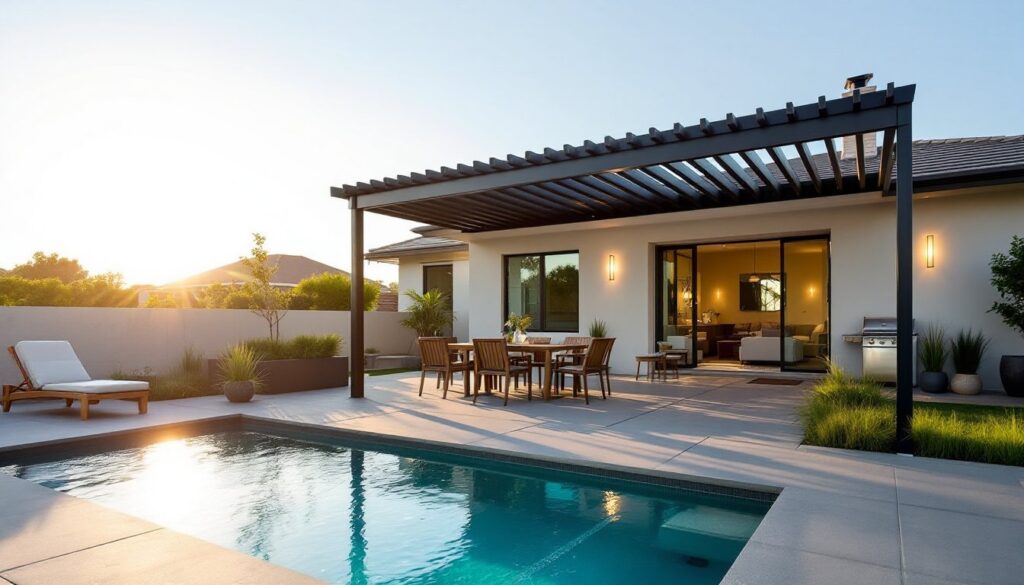
Clean lines and neutral palettes define modern minimalist pool patios. Think poured concrete or large-format porcelain pavers in gray or charcoal, paired with minimal landscaping, a few specimen plants, not a jungle. This approach works especially well for smaller yards where visual clutter feels cramped.
Materials matter here. Stamped concrete or large-format porcelain tiles (24″×24″ or bigger) create an uncluttered look because fewer grout lines interrupt the eye. If you’re pouring concrete yourself, rent a concrete mixer and plan for proper slope, at least 1/8 inch per foot, so water sheds away from the house and pool. Seal it afterward to reduce staining and cracking.
For a truly minimal vibe, position a single lounge chair or a pair of matching ones, skip the oversized umbrellas, and let a steel pergola do the shading work. Keep the palette to three colors maximum: your patio surface, the pool (typically blue or teal), and one accent color, perhaps charcoal planters or a single dark fence line. The restraint makes the pool itself the focal point.
Tropical Escape Designs
Tropical pool patios evoke vacation mode year-round. Use warm-toned pavers, think clay, terracotta, or stone in honey and amber shades, and layer in lush plantings. Palms, ferns, hibiscus, and flowering shrubs create that resort feeling. Unlike minimalist designs, tropical patios embrace fullness: dense greenery frames and softens the hardscape.
Pavers in a running bond or random pattern (rather than a rigid grid) feel more organic. If you’re laying pavers yourself, prep the base with 4 to 6 inches of compacted gravel and 1 inch of sand. Wet the sand before placing pavers and use a rubber mallet to tap them level. Leave 1/4 inch joints and use polymeric sand for stability.
Garden design for a swimming pool area shows how strategic plant placement softens edges and creates visual interest. Add a water feature, a small fountain or rainfall showerhead mounted on a post, to reinforce the tropical mood. Tiki torches or string lights hung overhead complete the escape-to-paradise vibe without breaking the budget.
Multi-Functional Outdoor Living Spaces
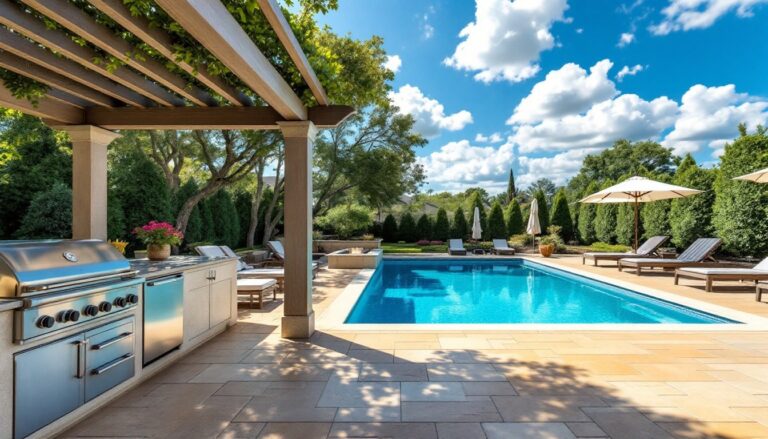
Many homeowners today want their pool patio to do double duty: swimming and entertaining, lounging and grilling, kids’ play and adult relaxation. Zone the space intentionally. Locate a dining table (36×48 inches minimum for four people) between the pool and house, so guests move naturally from one to the other. Position a built-in grill station at one corner and a seating lounge at another.
Designing outdoor spaces that balance function and aesthetics requires thinking about foot traffic. Create a clear path from the door to the pool, then branch off to secondary zones. Use subtly different paving materials or a change in elevation to define zones without walls. For instance, the lounging area might sit on a lower level, while the dining patio sits raised one or two steps.
Choose durable furnishings. Teak and aluminum frame tables withstand sun and splash: cushions in outdoor-grade fabric resist mildew. If installing a grill, check your local code, some jurisdictions require a minimum distance from the house (typically 10 feet). Plan for overhead cover over the dining zone: a shade sail or pergola with adjustable louvers keeps the space usable during midday heat.
Sustainable Patio Materials and Landscaping
Eco-conscious homeowners are swapping traditional concrete and stone for recycled and sustainably harvested alternatives. Recycled asphalt, permeable pavers, and reclaimed wood reduce environmental impact and often cost less than virgin materials. Permeable pavers let water drain through to the soil below, reducing runoff and supporting groundwater, especially important in drought-prone regions.
For landscaping, choose native plants suited to your climate zone. They require less water, fertilizer, and maintenance than exotic specimens. Pair native shrubs with mulch (not plastic sheeting) to retain moisture. If you’re designing a tropical pool area with sustainability in mind, select ornamental grasses and flowering perennials native to your region that provide that lush aesthetic without the water bill.
Compost garden waste on-site if space allows, and consider a rain barrel system to collect runoff for irrigation. These features don’t demand contractor work, you can install a basic rain barrel system in an afternoon. Landscape fabric and wood edging (untreated cedar lasts 10 to 15 years) define planting beds inexpensively. Skip the ornamental rocks: they absorb and radiate heat, making the patio uncomfortable in summer.
Lighting and Entertainment Elements
Outdoor lighting transforms the patio from a daytime-only zone to a fully functional evening space. Layer three types: ambient (overhead area lighting), task (around the grill or dining table), and accent (uplighting trees or architectural features).
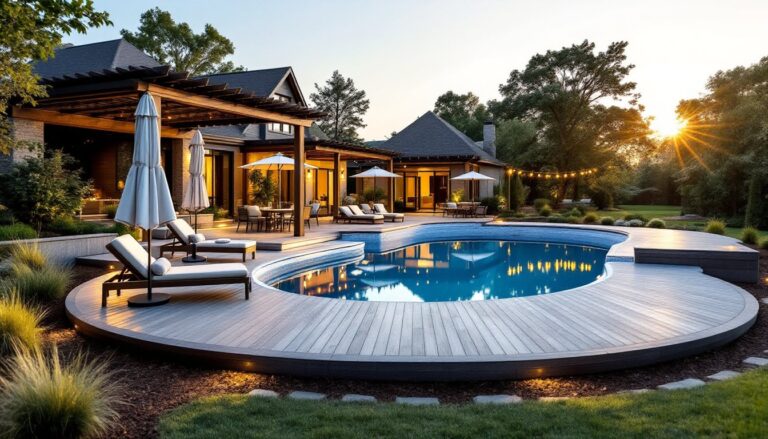
LED strip lights mounted under eaves or along deck edges provide low ambient light and cost pennies to run. For dining areas, install pendant lights on a pergola or hang string lights, aim for a warm color temperature (2700K) to avoid the harsh white glow. String lights, in particular, require only a power source and a couple of hooks: no electrician needed. If you want permanent uplighting on plants, run low-voltage cable (12V) buried in the patio or tucked beneath pavers. This is a manageable DIY job if you’re comfortable with basic wiring: otherwise, hire a licensed electrician (codes vary by jurisdiction, but most areas require permits for hardwired outdoor lighting).
For entertainment, resources on home decor and design inspiration help you choose finishes and themes that tie the space together. A built-in fire pit or tabletop burner extends the season and creates a gathering focal point. Ensure the pit sits at least 12 feet from structures and overhanging branches, per fire code. A small sound system with weather-resistant speakers tucked into planters finishes the retreat.
Creating Shade and Privacy Solutions
Full sun feels great for swimming, but guests need shade to avoid heat exhaustion. A pergola (8×10 feet minimum) over a lounge area or dining space filters harsh afternoon rays without blocking all light. If you’re building one, use pressure-treated 4×4 posts (8-foot height is standard), 2×10 beams, and 2×6 or 2×8 purlins spaced 12 to 18 inches apart for aesthetic appeal while allowing airflow. Set posts in concrete footings at least 3 feet deep (frost line varies by region: check local codes). For a finished look, run a drip line or irrigation through or alongside the structure.
Shade sails are faster to install and more flexible. They’re tensioned fabric anchors that create triangular shadows. Install anchor points (bolts or cable hardware) into the patio structure, then tension the sail, no tools beyond a wrench and ladder. Sails cost $300 to $800 depending on size: a pergola runs $1,500 to $4,000 for materials.
Privacy solutions protect you from neighbors’ eyes. Dense shrubs and flowering trees planted at property lines create living screens over time (typically 2 to 3 years to full density). For immediate privacy, a slatted wood fence (6 feet high) or composite screening panels mounted to posts block sightlines. Exploring design options on platforms like Houzz shows how different communities solve privacy and shade together, often combining fencing with strategic plantings for both function and aesthetics.
Conclusion
Your pool patio isn’t an afterthought, it’s the stage where your pool becomes a gathering place. Whether you’re drawn to the clean elegance of minimalist design, the lush comfort of tropical landscaping, or the practical flexibility of multi-zone layouts, start with materials suited to your climate and a layout that honors how you actually live. Build in shade, lighting, and privacy from day one. The best patios balance beauty with function, and they’re built to last through seasons of family gatherings and quiet mornings.