Table of Contents
ToggleAn above ground oval pool is a practical investment, but it’s the deck around it that turns a functional backyard into a destination. A well-designed pool deck provides safe access, defines your outdoor entertaining space, and shields your pool investment from sun damage and debris. Whether you’re working with a tight budget or planning a premium outdoor renovation, the right deck solution can elevate your backyard’s appeal and functionality. This guide walks you through modern design ideas, material options, and practical strategies to create a pool zone that looks intentional and feels inviting, without requiring a contractor’s budget or months of construction.
Key Takeaways
- Composite decking is the most durable choice for above ground oval pool decks, lasting 25+ years with minimal maintenance while resisting warping, splinters, and fading better than pressure-treated wood.
- Budget-conscious homeowners can use pressure-treated lumber ($4–$8 per linear foot) or decorative concrete ($6–$12 per square foot) to achieve a premium look without the composite investment.
- Pergolas, shade sails, and quality umbrellas create shaded lounging zones that transform a functional pool area into an inviting destination where people actually want to spend time.
- LED deck lighting, landscape lighting, and string lights enhance safety and ambiance for evening pool use, with low-voltage wiring providing the best balance of visibility and mood.
- Proper drainage (sloping decks at 1/8 inch per foot), anti-slip surfaces, annual inspections, and strategic landscaping maintenance prevent costly damage and ensure long-term durability.
Composite Decking Solutions for Durability and Style
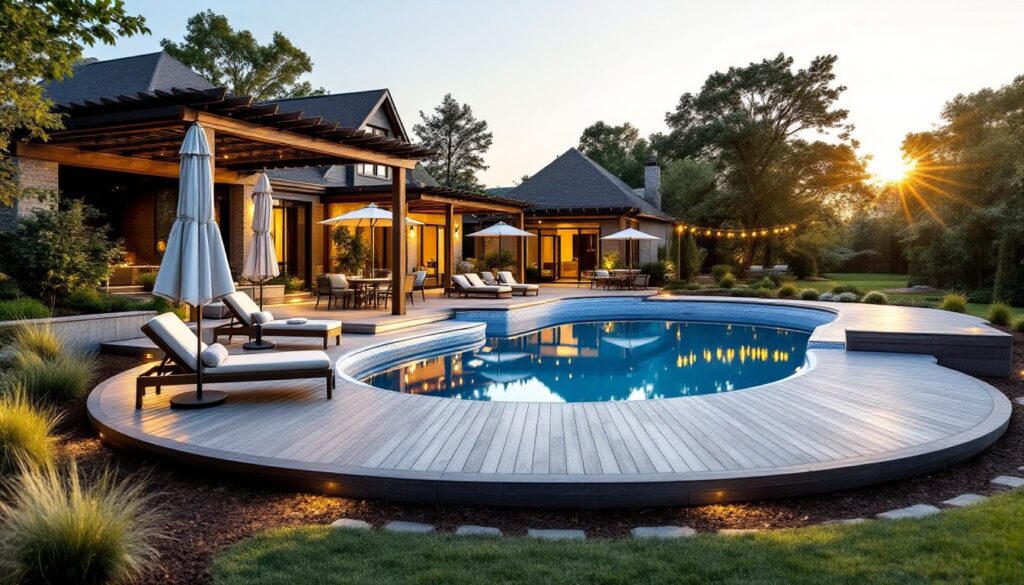
Composite decking has become the go-to choice for pool surrounds because it handles constant moisture, UV exposure, and foot traffic without warping, rotting, or requiring annual staining. Unlike pressure-treated lumber, which splinters and degrades after 10–15 years, composite boards maintain their color and structural integrity for 25+ years with minimal upkeep.
Composite planks come in a range of textures and colors, from realistic wood grain finishes to contemporary grays and warm taupes. A typical board runs $8–$15 per linear foot installed, making it roughly 2–3 times the upfront cost of pressure-treated wood, but the lifespan and low maintenance often justify the expense for homeowners planning to stay put. Look for capped composite boards (boards with a protective outer layer) if your pool sees intense sun: they resist fading better than non-capped options.
For an oval pool, composite works beautifully because it can be cut and curved more forgivingly than some alternatives. Boards install with hidden fasteners or composite screws that won’t rust or stain the surface. Most manufacturers offer a 30-year warranty, and some, like Trex or TimberTech, have recycled plastic content, a bonus if sustainability matters to your design goals. The trade-off: composite can feel softer underfoot than wood or concrete on scorching days, so consider barefoot comfort if you live in a hot climate.
Budget-Friendly Deck Options That Look Premium
If composite is outside your budget, pressure-treated lumber remains the most economical option for pool decks. Southern yellow pine or treated cedar costs $4–$8 per linear foot and installs straightforwardly with standard framing techniques. It won’t last as long as composite, but with proper sealing (every 2–3 years), you’ll get 10–15 solid years before replacement becomes necessary.
Stain-treated wood in warm grays or soft browns can look premium without the composite price tag. The key is consistent maintenance: apply a quality exterior wood sealer annually and allow the deck to acclimate for 48 hours after installation before sealing. This prevents cupping and prolongs the finish.
Another budget-conscious option is concrete with a decorative finish. A standard concrete pad runs $6–$12 per square foot, and you can add texture, color, or a non-slip coating to elevate the look. Acid stains or concrete dyes let you match any aesthetic, while exposed aggregate or a broom-finished surface provides slip resistance around wet areas. Concrete does crack over time, especially in freeze-thaw climates, so proper base preparation and control joints are non-negotiable. You may also want to explore simple deck designs that maximize impact without unnecessary complexity, keeping costs down.
Shade and Seating: Creating a Functional Pool Zone
Pergolas and Umbrellas for Comfort
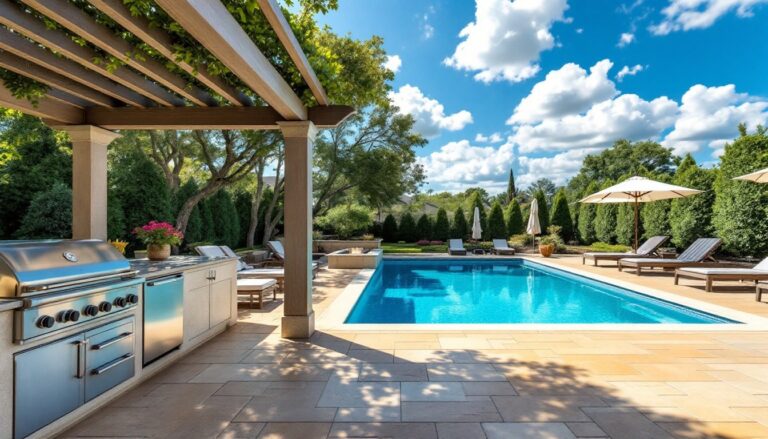
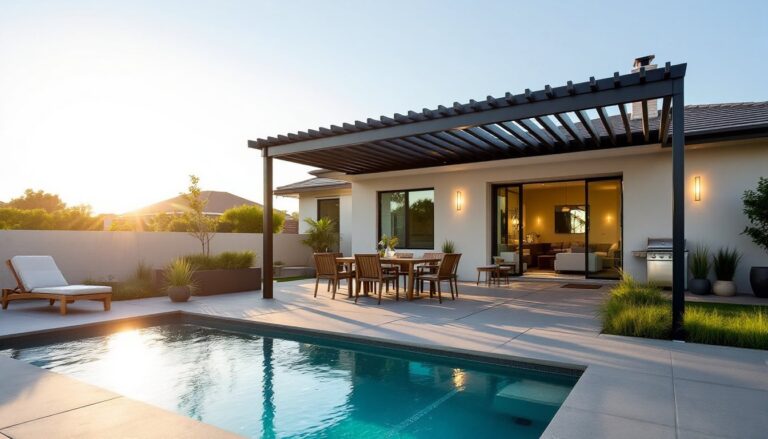
A shaded lounge area is the difference between a deck people use and one they avoid on hot afternoons. Pergolas, open-roof structures with cross-beams, allow dappled light through while providing psychological shade that makes the space feel cooler. A basic 12×12 ft pergola costs $2,000–$4,000 installed if you build it yourself or hire locally: prefab kits run $800–$1,500 and can be assembled in a weekend with a helper and basic tools (drill, miter saw, level, tape measure).
For flexibility, retractable pergolas or shade sails are excellent alternatives. Shade sails (canvas or poly fabric stretched between posts) cost $400–$1,200 for a 12×12 ft span and can be adjusted seasonally. They’re lighter visually than a pergola and don’t require permanent footings in some municipalities.
Umbrellas are the fastest, most budget-friendly option, market umbrellas run $200–$600 and can be weighted or anchored to a fixed base. Use heavy-duty commercial-grade umbrellas (3-inch diameter pole minimum) rather than patio umbrellas, which fail quickly in exposed pool settings.
Build built-in seating into your deck structure by framing a 16-inch bench along one edge. Cap it with cushions for comfort and allow water to drain underneath. Pair this with outdoor entertaining deck concepts to create a zone that naturally draws family and friends. Storage under the bench (waterproof boxes for towels, toys, or pool chemicals) adds function without cluttering the space.
Lighting and Landscaping to Enhance Ambiance
Once the sun sets, your pool deck should feel intentional, not abandoned. Recessed deck lights or step lights (LED options cost $20–$50 each) create a safe pathway and warm ambiance. Install them 2–3 feet apart along steps and any elevation change, always with GFCI-protected outlets. Solar-powered options avoid wiring but deliver dimmer light: if you prioritize visibility and mood, run low-voltage (12V) LED wiring under the deck during framing, a detail that pays dividends for evening entertaining.
Landscape lighting around the pool’s perimeter (uplighting on trees, path lights, or accent lights on plantings) extends the visual boundary of your outdoor space and adds sophistication. String lights or bistro bulbs strung overhead between the pergola and the house create a cohesive atmosphere at zero structural cost ($40–$150 for solar or plug-in options).
For landscaping, keep plantings at least 3 feet from the pool edge to minimize debris and maintain sight lines. Low-maintenance options like ornamental grasses, dwarf shrubs, or perennials suited to your climate work best. Avoid trees with seedpods or fruit: they clog filters. Mulch or rock beds between plantings and the deck keep things tidy without the upkeep of lawn. Deck lighting strategies can be adapted to pool surrounds, the principles of layered outdoor lighting (task, accent, ambient) apply equally to aquatic spaces.
Safety Features and Maintenance Tips
Anti-slip surfaces are non-negotiable around a pool deck. Wet feet and smooth wood or composite can lead to falls. Options include adhesive anti-slip tape (reapply yearly), textured stain finishes, or dedicated non-slip coatings ($2–$4 per square foot). For concrete, a broom finish or non-slip paint (applied over sealed concrete) works well.
Pool decks should slope slightly (1/8 inch per foot) away from the pool toward a drainage area to prevent standing water, which breeds algae and damages the deck surface. If your site doesn’t drain naturally, install a French drain or buried PVC along the pool’s perimeter.
Maintenance varies by material. Composite needs occasional washing (mild soap, no pressure washer above 1,500 PSI). Wood requires annual or biennial sealing depending on climate. Concrete needs sealing every 2–3 years to resist staining and water penetration. Covers for decks and patios can extend your deck’s lifespan during off-season by shielding it from harsh weather and debris accumulation.
For chemical storage, keep pool chlorine and other treatments in a separate shed at least 10 feet from the deck. Pool chemicals degrade wood and composite, and storing them on the deck creates a safety and compliance hazard. Reference local fire codes: most jurisdictions restrict residential chemical storage directly under roofs or in enclosed structures without ventilation. Inspect your deck annually for soft spots (wood), cracks (concrete), or material degradation. Catching damage early, before it spreads, saves thousands in repair costs later.
Conclusion
Your above ground oval pool deck doesn’t have to be complicated or expensive, it just needs to be intentional. Whether you choose durable composite, budget-friendly pressure-treated wood, or polished concrete, pair it with thoughtful shade, strategic lighting, and smart maintenance habits. Start with a clear budget and your preferred material, add seating and shade, then layer in lighting and landscaping. The result is a backyard zone that looks intentional, feels inviting, and stands up to years of poolside living.