Table of Contents
ToggleA well-designed pool patio isn’t just about poolside lounging, it’s the hub where family gatherings, summer entertaining, and quiet weekend mornings come together. Whether you’re upgrading an existing pool area or starting from scratch, smart backyard pool patio ideas can turn wasted space into an outdoor living destination. The difference between a functional pool deck and a truly inviting patio comes down to thoughtful layout, durable materials, shade solutions, and finishing touches. This guide walks you through practical decisions that will make your pool area safer, more comfortable, and genuinely enjoyable year-round.
Key Takeaways
- Plan your backyard pool patio layout with at least 8–10 feet of clearance beyond the pool edge and separate zones for lounging, dining, and equipment to ensure comfortable traffic flow and safety.
- Choose heat-resistant and slip-resistant materials like travertine, light-colored concrete, or textured porcelain pavers (COF 0.6+) to prevent burns and slips on wet pool patio surfaces.
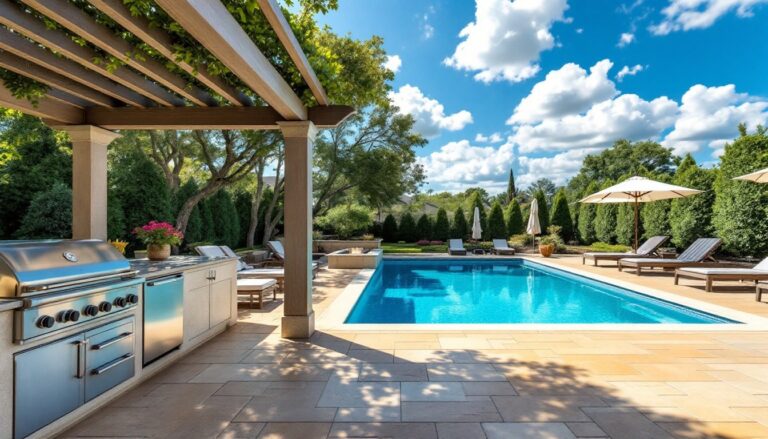
- Install shade structures like pergolas, retractable canopies, or gazebos sized 12–16 feet wide to transform your patio into a comfortable entertaining space while reducing evaporation and extending your pool season.
- Add low-voltage LED lighting with deck lights spaced 4–6 feet apart and string lights overhead to make your pool patio safe and inviting after sunset.
- Select non-deciduous plants positioned 10–15 feet from the pool and use container plantings to add greenery without clogging filters or damaging patio surfaces.
- Grade your pool patio at 1–2% slope to improve drainage, prevent standing water, and protect your pool area from moisture-related damage.
Choose the Right Patio Layout for Your Pool Area
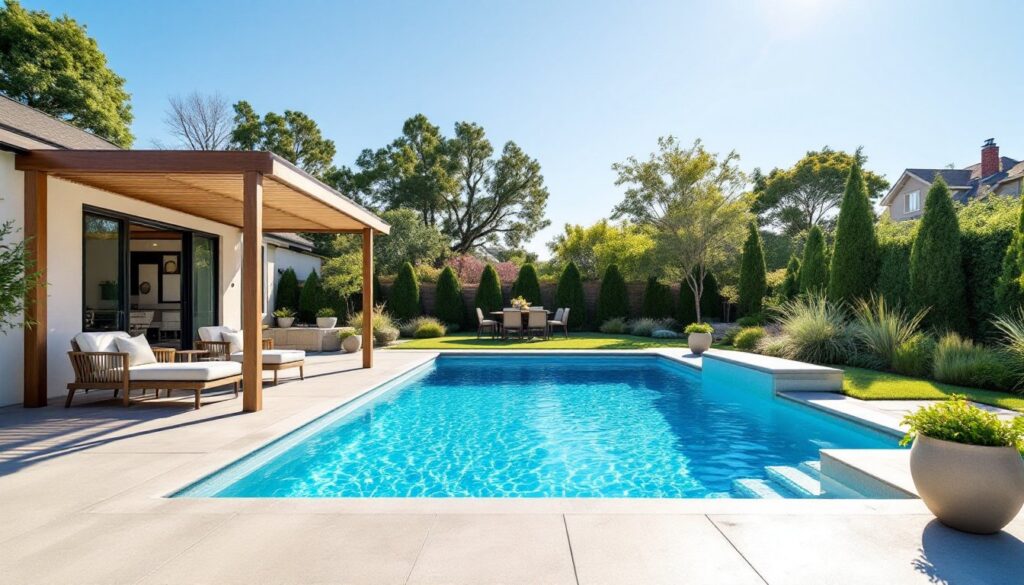
Before breaking ground or ordering materials, map out how people will actually move through your space. Most pool patios benefit from a clear traffic flow: entry points, lounging zones, dining area, and utilities (equipment pad, filter housing, steps) should each have its own logical place.
Start by measuring your pool length and width, then extend at least 6 feet beyond the pool edge on the active side (where people enter and lounge). Building codes, including the International Code Council (ICC) standards, typically require at least 5 feet of unobstructed clearance around pools, though 8–10 feet feels more comfortable for hosting. If you’re planning seating or a dining table, add another 4–6 feet in depth for those zones. Corner areas often work well for shade structures like pergolas or umbrellas, keeping the main deck open.
Consider elevation changes too. A slightly sunken patio, or one that slopes gently away from the pool, improves drainage and prevents standing water. A 1% to 2% grade (about ⅛ inch drop per foot of distance) is standard and usually imperceptible underfoot but highly effective at moving water away from pool edges and structures.
Mobile Home Patios and Decks offer creative layout ideas for smaller spaces, showing how to maximize comfort when square footage is limited. Jot your measurements and sketch zones on paper, it clarifies what’s realistic before you commit to materials or hire contractors.
Flooring and Surface Materials That Work Best Around Pools
Your pool deck takes a beating: constant moisture, UV exposure, foot traffic, chlorine splash, and temperature swings. Not every patio material handles this abuse equally.
Concrete is the most budget-friendly option and ranks among the most common pool surround material. Standard 4-inch thick concrete (actually 3.5 inches in nominal measure) is standard for residential pools. Brushed finish or broom finish concrete improves slip resistance over smooth troweled surfaces. Sealed concrete can extend its life and reduce staining, though resealing every 2–3 years is necessary. Concrete Decks and Patios provide durability and design flexibility with staining or scoring patterns.
Natural stone, pavers, flagstone, or travertine, delivers elegance and excellent slip resistance, especially travertine, which stays cooler underfoot than concrete or tile. Travertine’s naturally porous surface provides grip even when wet. But, installation is labor-intensive, and prices vary wildly by region and stone grade.
Porcelain pavers offer a middle ground: they’re more slip-resistant than glazed ceramic tile (look for a rating of 0.6 or higher under wet conditions), resist staining better than natural stone, and come in countless finishes. Porcelain 12×24-inch pavers are popular for larger, clean-lined patios.
Wood and composite decking can work adjacent to pools, not as the primary deck surface, because they stay cooler and feel comfortable underfoot. But, they require frequent maintenance (stain, seal, or composite treatments) and don’t drain as effectively as solid surfaces.
Heat-Resistant and Slip-Resistant Options
When summer sun hits your patio at full strength, surface temperature matters. Barefoot visitors notice immediately. Light-colored materials reflect heat: darker ones absorb it. Test any candidate material by checking its surface temperature on a sunny day, pool deck surfaces can exceed 140°F on dark materials and cause burns.
Travertine, light-colored concrete, and light-colored pavers stay noticeably cooler than dark concrete or tile. If you love dark materials for aesthetic reasons, apply a light-colored sealant that reflects UV, or plan strategic shade to keep those zones usable during peak sun hours.
Slip resistance is measured by a coefficient of friction (COF). For wet areas, anything 0.60 or above is considered safe: above 0.70 is ideal. Brushed concrete, textured pavers, and travertine naturally meet or exceed these standards. Polished or smooth glazed tiles fall short, avoid them around pools. Always test new materials when wet before committing to a large installation.
Create Shade and Shelter Solutions
Afternoon shade transforms a brutally hot patio into an actual destination. Beyond sunburn prevention and comfort, shade reduces water evaporation and extends your pool season on cooler evenings.
Size your shade structure to cover the lounge area, typically 12–16 feet wide and 10–14 feet deep. Undersizing creates awkward shadows that move throughout the day: oversizing blocks views and looks out of proportion. Local building codes may require a permit for permanent shade structures if they’re connected to your home, so check before you build.
Sun Shades for Patios offer practical solutions for cooling outdoor spaces. Structural footings must sit on solid ground below the frost line (depth varies by region: your local building department specifies this). Posts should be at least 4×4 lumber or equivalent, set in concrete footings at least 2–3 feet deep in most climates.
Pergolas, Umbrellas, and Gazebo Styles
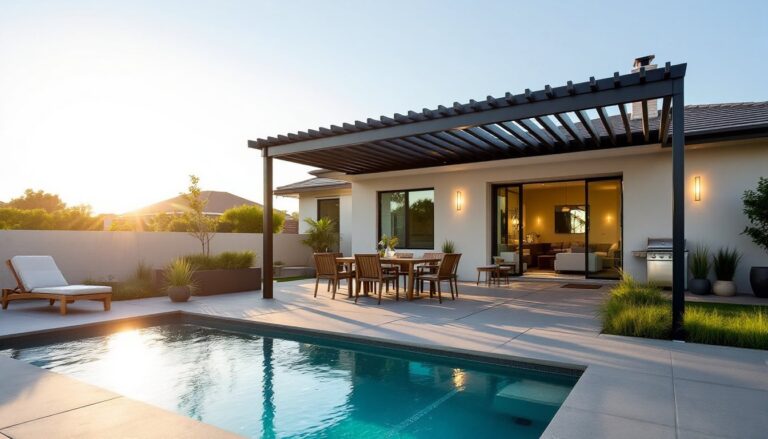
Pergolas are open-beam structures that filter light and create dappled shade while allowing airflow. They’re less expensive than fully enclosed options, require fewer permits in some jurisdictions, and look clean and modern. A 2-foot overhang extends your shade envelope: wider overhangs look grand but can trap wind. Space beams 12–18 inches apart for effective shade without making the structure too heavy visually.
Retractable canopies mount to a pergola or wall and roll out when needed, then retract during evening or winter. They’re motorized options available nowadays for convenience, though manual models cost less and require no power. Expect $2,000–$5,000+ for a quality motorized canopy (prices vary by region and size).
Gazebos, freestanding or semi-attached, offer full overhead protection and look more permanent. They’re pricier to install and require more substantial footings, but they shelter seating areas from both sun and light rain. An 8×10-foot gazebo is a comfortable entertaining space: 10×12 feels spacious.
Umbrellas are the simplest shade option: no permits, no installation. Cantilever umbrellas (the support is off to one side) shade lounge chairs without a center pole in the way. Offset pole umbrellas range from $200 for basic models to $1,000+ for commercial-grade options with fade-resistant fabric and smooth rotation. Look for UV-blocking fabric rated for outdoor use.
Lighting and Ambiance for Evening Enjoyment
Without proper lighting, your patio becomes unusable after dusk. Beyond functionality, well-placed lights extend the romance and utility of your outdoor space.
Deck lights (also called step lights or deck rail lights) are low-voltage LED fixtures installed in or under patio edging or railings. They’re safe to step around at night and cast just enough light to navigate. Spacing 4–6 feet apart is standard: 3-foot spacing provides brighter coverage. LED models use minimal power and last years without replacement.
String lights strung overhead between posts or trees create instant ambiance and are bright enough for casual dining. Warm-white LEDs feel more intimate than cool white. Ensure any overhead wiring clears walking paths (string at least 8 feet above traffic areas for safety).
Uplighting behind plants or against structures adds depth and visual interest. Spotlights aimed at landscaping or architectural features transform your patio’s nighttime appearance. Low-voltage landscape lights are typically 12V systems powered by a transformer: they’re safe and easy for homeowners to install.
Pool lights themselves, LED underwater lights or surface-mounted lights around the pool perimeter, offer both safety and aesthetics. Underwater LEDs are durable and energy-efficient. Color-changing options are fun for entertaining, though white or warm white are more practical for regular use.
Wiring requirements: Any above-ground permanent lighting connected to a power source should run through conduit or be buried at least 12 inches deep if it crosses the patio. Check your local electrical code: many jurisdictions require a licensed electrician for outdoor wiring. Low-voltage landscape lighting systems (12V transformers) are safer for DIY installation and don’t require a permit in most areas.
Landscaping and Greenery Around Your Pool Patio
Thoughtful plantings soften hard edges, provide natural privacy, and enhance the patio’s visual appeal. But, pools have specific landscape needs: falling leaves clog filters, roots can damage deck surfaces, and certain plants don’t tolerate chlorine splash.
Choose non-deciduous plants or those that shed minimally, conifers, ornamental grasses, and broadleaf evergreens work well. Avoid plants with soft, weak branches that break easily and drop debris. In warmer climates, yucca, palmettos, and native drought-tolerant species handle heat and sparse watering. In temperate zones, junipers, boxwoods, and landscape roses are low-maintenance and trim-friendly.
Tree placement matters: Position trees at least 10–15 feet from the pool to minimize leaf drop. Root systems of larger trees can crack patios if planted too close: trees and shrubs should be at least 6–10 feet from hard surfaces depending on root vigor.
Container plantings on the patio itself are flexible and manageable, move them as needed, control water runoff, and swap seasonally. Large clay or concrete pots filled with shade-tolerant plants (hostas, ferns, impatiens in shaded corners) or heat-lovers (agapanthus, lantana, salvia in sunny spots) add softness without permanent installation.
When selecting ground covers or border plantings, use chlorine-tolerant varieties. Direct pool drain splash away from delicate plants by positioning structures slightly upslope. In-ground landscape beds adjacent to the patio should slope away to prevent water pooling. Home Improvement Decks Patios showcase landscaping integration that balances aesthetics with practicality.
Sprinkler systems near patios should be positioned or angled to avoid watering hardscapes, unnecessary moisture accelerates deterioration. Drip irrigation or soaker hoses are ideal for landscape beds near pools because they target plant roots without spraying surfaces.