Table of Contents
ToggleA pool is only half the story, the deck surrounding it can make or break the entire backyard experience. Whether you’re working with a small residential pool or planning an upgrade, choosing the right pool deck material and design sets the tone for everything from safety and durability to aesthetics and entertainment value. In 2026, homeowners have more options than ever: durable composites that mimic wood without the rot, elegant pavers that age beautifully, stamped concrete that offers designer looks on a budget, and sustainable choices that don’t sacrifice style. This guide covers 12 modern swimming pool deck ideas to help you create a functional, stunning outdoor space that works for your climate, budget, and lifestyle.
Key Takeaways
- Composite and porcelain tile decking eliminate maintenance needs like sealing and staining, costing $12–$25 per square foot and outperforming traditional wood in chlorine-rich pool environments.
- Swimming pool deck ideas range from premium natural stone and pavers ($12–$30/sq ft) to budget-friendly stamped concrete ($8–$15/sq ft), each requiring different maintenance schedules and climate considerations.
- Stamped concrete delivers designer aesthetics at affordable prices but requires proper installation depth (4 inches minimum), control joints, and resealing every 2–3 years to prevent cracking and maintain slip resistance.
- Recycled rubber and permeable pavers offer eco-friendly, budget-conscious alternatives ($3–$12/sq ft) that drain water effectively and stay warm underfoot, ideal for families prioritizing sustainability over high-end finishes.
- Deck lighting, quality outdoor furniture, and shade structures transform a pool deck from functional to inviting, while non-slip surfaces and practical amenities like handheld showers directly impact safety and daily usability.
Composite and Porcelain Tile Decking
Composite decking has evolved dramatically over the past decade. Made from a blend of wood fibers and plastic, modern composites resist moisture, rot, and fading far better than treated lumber. They’re ideal for pool environments where chlorine splash, wet feet, and intense sun exposure are constant challenges.
Porcelain pavers are another premium option gaining traction around pools. These engineered tiles are denser and less porous than natural stone, meaning they absorb less water and resist staining better. Large-format porcelain tiles (24×24 inches or larger) create clean sight lines and require fewer grout joints where debris can collect.
Both materials require solid subsurface prep. For composites, build a level deck frame with proper drainage, standing water is the enemy of longevity. Porcelain tiles need a compacted base (4 inches of crushed gravel minimum), a leveling layer of concrete or mortar, and grout rated for pool areas. Neither material needs staining or sealing like wood, which saves years of maintenance. Budget $12–$18 per square foot for quality composite and $15–$25 per square foot for porcelain installation.
Natural Stone and Pavers for Timeless Appeal
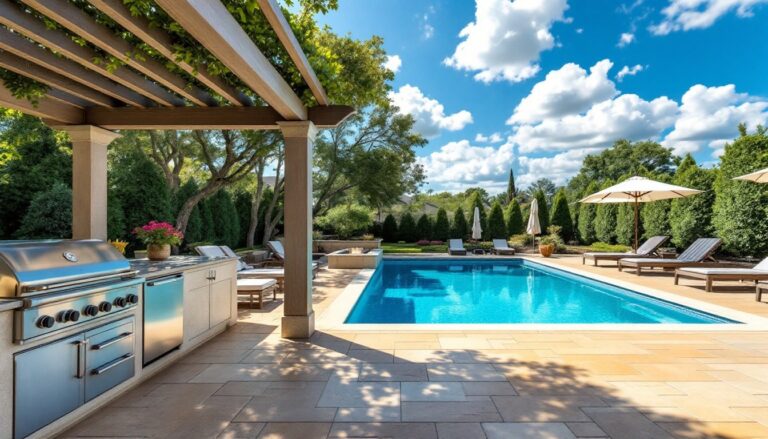
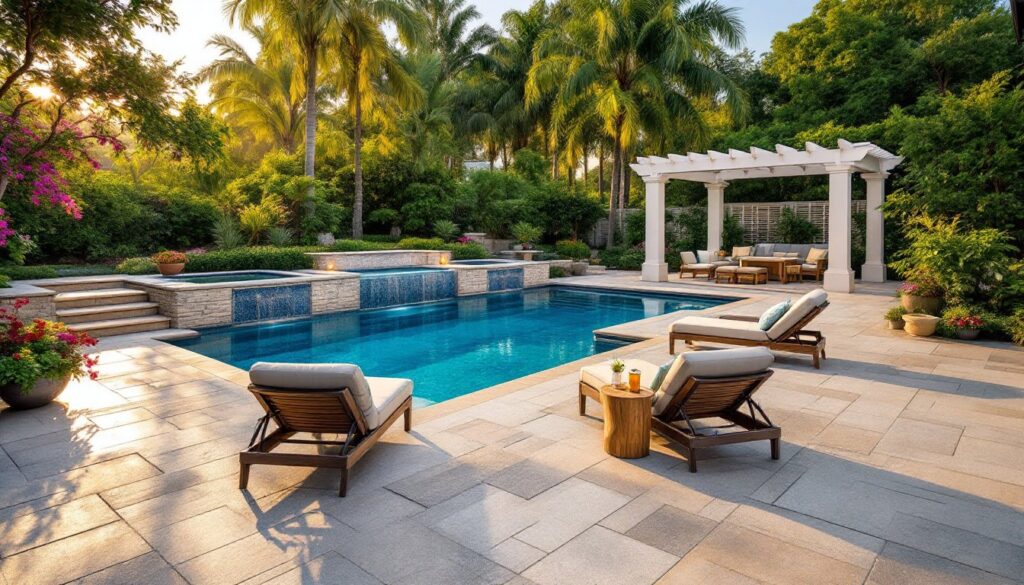
Natural stone, flagstone, slate, travertine, and bluestone, brings timeless character to a pool deck. Travertine is especially popular because its naturally porous surface provides excellent slip resistance when wet, a critical safety feature. It also stays cooler underfoot than dark stone, a real comfort on scorching days.
Travertine and other soft stones require sealing every 1–2 years to protect against chlorine damage and UV fading. Budget time and money for ongoing maintenance: it’s part of the aesthetic trade-off. Slate and bluestone are harder and more durable but are denser and can feel cold and slippery without proper texture.
Permeable pavers designed for wet environments work well too. These allow water to drain through joints rather than pooling on the surface, reducing slip hazards and extending material life. Installation costs range from $12–$30 per square foot depending on stone type and complexity. If hiring labor, expect $8–$15 per square foot on top of materials. Always check that your chosen stone is rated for pool use: some stones absorb too much chlorine and degrade rapidly.
Stamped Concrete: Affordable Style and Durability
Stamped concrete delivers designer aesthetics at contractor-friendly prices. A skilled concrete finisher pours a slab, stamps patterns into it before it cures, and applies color hardeners and sealers to mimic stone, brick, or tile. The result looks expensive but typically costs $8–$15 per square foot, less than half the price of real stone or porcelain.
The catch: stamped concrete cracks. Concrete naturally develops hairline fractures as it cures and expands/contracts with temperature swings. These cracks won’t compromise safety or function, but they’re visible. Quality installers minimize cracking through proper slab thickness (4 inches minimum), control joints placed every 6–8 feet, and adequate subbase prep. A pool deck also needs a non-skid sealer: standard concrete becomes dangerously slippery when wet.
Stamped concrete works best in climates without extreme freeze-thaw cycles. If you live in a cold region, the freeze-thaw cycle can accelerate deterioration. Resealing every 2–3 years is mandatory to protect the color and slip resistance. With proper maintenance, a stamped concrete pool deck lasts 20–30 years. Hire a licensed concrete contractor with pool deck experience: this isn’t a DIY job.
Sustainable and Budget-Friendly Options
Recycled Rubber and Permeable Pavers
Recycled rubber tiles, made from shredded tires, are gaining traction in pool environments. They’re affordable ($3–$8 per square foot), slip-resistant even when wet, and warm underfoot, important for families with children. They’re also permeable, so rainwater drains away instead of pooling. Installation is straightforward: lay them over a compacted base with proper drainage, and some snap together without adhesive.
The downside is aesthetics, recycled rubber has an industrial look that doesn’t suit all design visions. It also can trap leaves and debris in the material’s texture, requiring regular sweeping and washing. Some people find the slight “rubbery” smell off-putting initially, though it fades.
Permeable concrete pavers (porous pavers designed to let water drain through) are another eco-conscious choice. They reduce runoff, lower heat absorption compared to solid concrete, and can integrate native plantings nearby. Installation is similar to standard pavers but requires a porous subbase (recycled asphalt or gravel) to function properly. They cost $5–$12 per square foot and need occasional power washing to maintain drainage. Choose permeable options only if your local building codes allow them and your soil drains reasonably well.
Both options suit homeowners prioritizing sustainability and budget over high-end finishes. They’re durable (10–20 years with care), low-maintenance, and friendly to the environment.
Furniture, Lighting, and Accessory Ideas
The deck material is just the foundation. Furniture, shade structures, and lighting transform a functional pool deck into an inviting retreat. Deck lighting enhances safety and atmosphere, allowing families to enjoy the space after sunset while reducing trip hazards. Install low-voltage LED path lights along deck edges, underwater pool lights for ambiance, and accent lighting on shade structures.
Comfortable outdoor furniture matters more than most homeowners expect. Quality lounge chairs with quick-dry cushions, sturdy side tables, and a shaded seating area make the difference between a space used daily and one that sits empty. Position furniture to face the pool and any landscape views, and leave enough open deck for movement and safety.
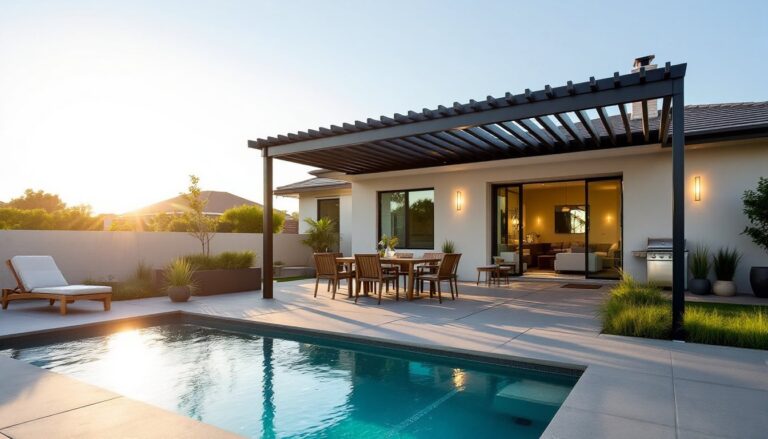
Shade is essential. Pergolas, retractable awnings, or even large market umbrellas protect skin and reduce surface temperature on hot materials like dark stone or concrete. Outdoor entertaining decks benefit from shade structures that create intimate zones for lounging and socializing. Consider built-in benches along pool edges or planters with tropical greenery to soften the hardscape and create visual interest. Non-slip bath mats, handheld showers for rinsing off chlorine, and small storage lockers for towels and sunscreen add practical comfort layers that guests notice immediately.
Conclusion
A modern pool deck doesn’t have to be expensive or complicated, it just needs to match your priorities. Composite or porcelain deliver longevity and minimal upkeep: natural stone and stamped concrete offer timeless or budget-friendly style: recycled and permeable options align with sustainability goals. Whatever material you choose, invest in proper subsurface prep, slip-resistant finishes, and thoughtful furniture and lighting to create a deck that’s safe, functional, and genuinely enjoyable. Your pool deserves a stage worthy of it.