Table of Contents
ToggleNothing beats a refreshing dip on a hot day, but when the sun’s beating down at full force, even a pool can feel less inviting. That’s where pergola pool shade ideas come into play. A well-designed pergola transforms your pool area from a sun-scorched zone into a comfortable retreat where the whole family actually wants to linger. Whether you’re looking for dappled natural light or complete coverage, there’s a pergola solution that fits your space, budget, and aesthetic. Let’s explore the smartest ways to add shade to your pool area without sacrificing style or airflow.
Key Takeaways
- Pergola pool shade ideas provide the ideal balance between airflow and UV protection—allowing 40-50% of sunlight through while keeping your pool area cool and inviting.
- Open lattice pergolas are a budget-friendly, DIY-friendly option that can be completed in 2-3 days using pressure-treated lumber and basic carpentry tools, though retractable systems offer flexible coverage for $2,500-$6,000.
- Living shade through climbing vines like clematis, grape vines, or trumpet vine cools the air naturally by 5-10°F through evapotranspiration while adding aesthetic appeal, though establishment takes 1-2 seasons.
- Shade cloth overlays are the fastest and cheapest solution, with 50-70% density cloth costing only $100-300 and easily removable for seasonal adjustments.
- Choose your pergola solution based on your site’s sun exposure direction and climate; afternoon western sun demands serious coverage, while humid climates benefit most from open designs that prioritize airflow.
- High-quality outdoor acrylic fabric in retractable or fixed systems (300-gram solution-dyed acrylic) blocks 80-95% of UV and resists mildew better than cheaper vinyl alternatives over time.
Why A Pergola Is Perfect For Your Pool Area
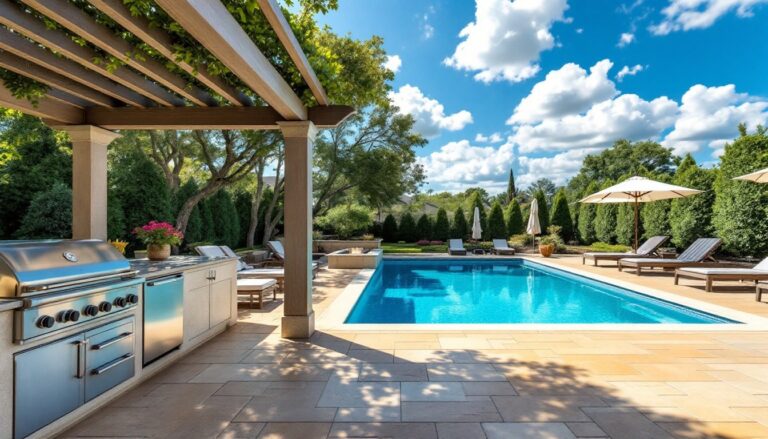
A pergola sits at the sweet spot between a full-coverage roof and zero shade. Unlike a solid patio cover that blocks all light and traps heat underneath, a pergola allows air to circulate while filtering direct sunlight. This is crucial for pool areas, where stagnant heat under a solid structure becomes insufferable.
From a structural standpoint, pergolas are relatively straightforward to build. Most residential pergolas use standard 4×4 or 6×6 lumber posts set in concrete footings, with 2×6 or 2×8 beams spanning between them. The overhead lattice or slat pattern is what creates the dappled shade effect. Because they’re not fully enclosed, pergolas typically don’t require the same permits as enclosed structures, but always check your local building department before starting, as codes vary by jurisdiction.
The other advantage? Pergolas integrate beautifully with pool landscapes. They frame views, define space, and look intentional rather than purely functional. A properly anchored pergola can handle wind loads and won’t feel flimsy when you brush past it wet.
Open Lattice Pergolas For Natural Light And Airflow
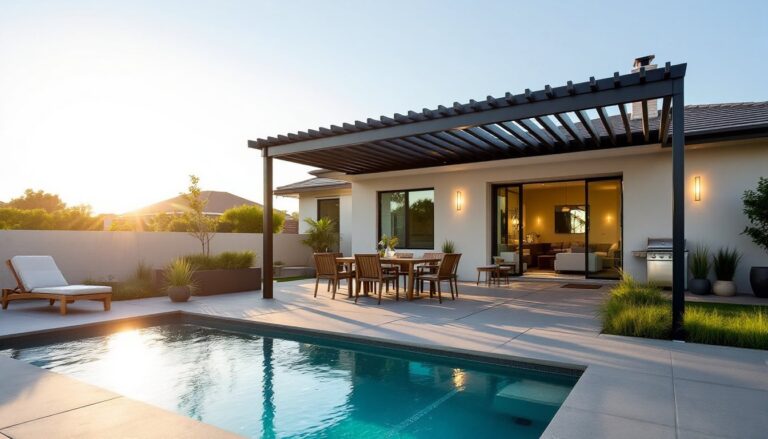
Open lattice pergolas are the classic choice for pools. Instead of solid beams overhead, you get a grid or diagonal pattern of 1×4 or 2×4 slats spaced a few inches apart. This design lets 40-50% of sunlight through, depending on the angle and spacing, while still providing meaningful shade and reducing UV exposure.
The beauty of lattice is its flexibility. You can orient the slats north-south, east-west, or even diagonally to control which times of day are shadiest. An east-facing pergola will shade the area in afternoon hours when the sun is hottest. The spacing between slats (typically 2 to 6 inches) directly affects both shade density and wind resistance, wider spacing means more light but less wind blockage.
Building an open lattice pergola is within reach for most DIYers with basic carpentry skills. You’ll need a miter saw (or circular saw, though cuts will be rougher), a drill, lag bolts or screws rated for outdoor use, and pressure-treated or cedar lumber. Start by setting posts in concrete footings below the frost line, this prevents heave in winter climates. Attach beams, then add your lattice pattern using corrosion-resistant fasteners. Expect 2-3 days of work for a medium-sized pergola. Sand all surfaces afterward and apply exterior stain or sealant: untreated wood will gray and eventually rot near the pool’s moisture.
Retractable Canopy Pergolas For Flexible Coverage
If you want shade on demand without committing to a fixed structure, a retractable canopy pergola is your answer. These systems mount motorized fabric panels (usually Sunbrella or similar solution-dyed acrylic) to an aluminum frame that can be opened or closed like venetian blinds. You get full sun exposure when you want it, and complete coverage when you need it.
The trade-off is cost and complexity. A quality retractable system for a medium pool area (12×14 feet) runs between $2,500 and $6,000 installed, depending on automation features. Motors add convenience but also a potential failure point, and motors don’t love the salt air near ocean-facing pools. Manual systems cost less but require hand-cranking or pulling cords.
If you go the retractable route, prioritize the quality of the fabric and frame. 300-gram solution-dyed acrylic blocks 80-95% of UV and resists mildew better than laminated fabric. Cheaper vinyl alternatives tend to crack or sag after a few seasons. Installation usually requires a contractor unless you’re confident in aluminum joining and motor wiring. Check that the frame is rated for your snow and wind loads, this matters more than with passive pergolas since the extended canopy acts like a sail.
Climbing Vines And Greenery Solutions
Living shade is the most natural approach. Climbing vines grown on a pergola create dappled, cooling shade through evapotranspiration, basically, the plants cool the air as they release moisture. In summer, a vine-covered pergola can reduce temperatures by 5-10°F compared to bare wood.
The catch: it takes a season or two for vines to establish and cover the pergola fully. You’re also managing the biology, watering, training new growth, pruning to prevent overgrowth. But if you’re patient, the payoff is stunning: a lush canopy that improves air quality and provides wildlife habitat.
Best Plants For Pool Shade
Choose vines suited to your climate zone. Clematis (zones 3-9) produces delicate flowers and dies back in winter, allowing sun through. Grape vines (zones 5-9) are vigorous, produce fruit, and tolerate dry heat. Trumpet vine (zones 4-9) grows aggressively, sometimes too much, but creates excellent coverage and attracts hummingbirds.
For warmer climates, passion vine (zones 6-11) offers ornamental flowers, while bougainvillea (zones 9-11) delivers vibrant color and dense coverage in the Southwest and California. Keep vines pruned away from gutters and windows, and install a drip irrigation line at the base, consistent moisture helps them thrive in summer heat. Avoid ivy near salt-chlorine pools, as salt splash can damage some ivy varieties.
Shade Cloth And Fabric Overlay Options
The cheapest and quickest solution? Shade cloth strung over an existing pergola frame. 30% to 90% shade cloth (indicating light blockage) drapes between the beams, creating dense coverage without the expense of a motorized system. Shade cloth is woven polyethylene or polypropylene, engineered to block UV while allowing air passage.
The 50% or 70% varieties are popular for pools, they block enough sun to make a difference but don’t make the area feel like a cave. Shade cloth is temporary, which is both a pro and a con. You can remove it in winter or swap density as seasons change. Expect to pay $100-300 in material for a medium pool area. Staple or clamp the edges to the pergola frame with corrosion-resistant hardware. Every few years, UV exposure will degrade the cloth, and you’ll need to replace it.
If you want something more permanent, consider outdoor fabric panels, often the same acrylic used in retractable systems, attached with stainless steel hardware. These run $500-1,500 for a medium pergola but last 10+ years if you choose high-quality material and use ties or zippers to attach them. Install D-rings or grommet eyes along the edges for airflow control. For pools, sun shades for patios offer additional inspiration on fabric selection and mounting techniques that directly apply to pergola applications.
Conclusion
The best pergola pool shade idea depends on your climate, budget, and how much shade you really need. Start with your site: Does afternoon sun blast your pool from the west? That demands serious coverage. Are you in a humid climate where airflow matters as much as shade? Open lattice or climbing vines win. Once you know your priorities, the right solution becomes clear. Whether you build a simple lattice pergola yourself or invest in a motorized system, adding shade transforms your pool from a midday no-go zone into a comfortable, usable outdoor room all summer long.